
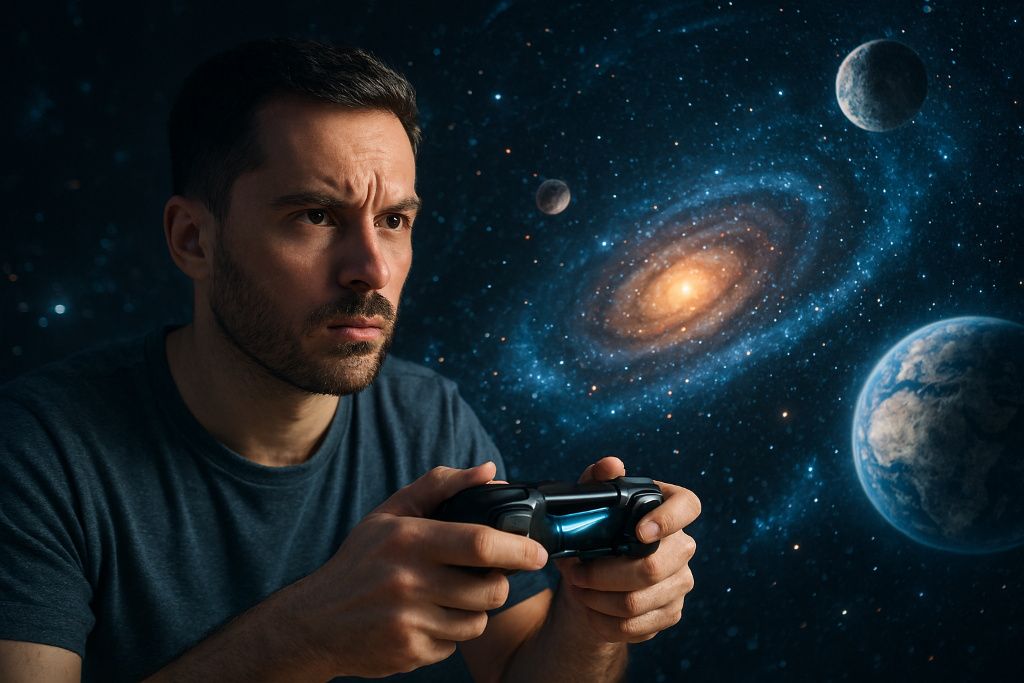
Have you ever played a video game so realistic that you forgot you were holding a controller? Now, take that thought and blow it up to the size of everything that exists. What if our universe—the stars, your morning coffee, the feeling of sunshine—was an incredibly advanced simulation, like a cosmic video game?
It sounds like science fiction, but some serious scientists and philosophers entertain the idea. It’s a modern twist on age-old questions about reality. Let’s explore this mind-bending possibility together, not with fear, but with the curiosity that makes us human. What clues might we look for in our own world?
1. The Core Idea: What Does “Simulation” Mean Here?
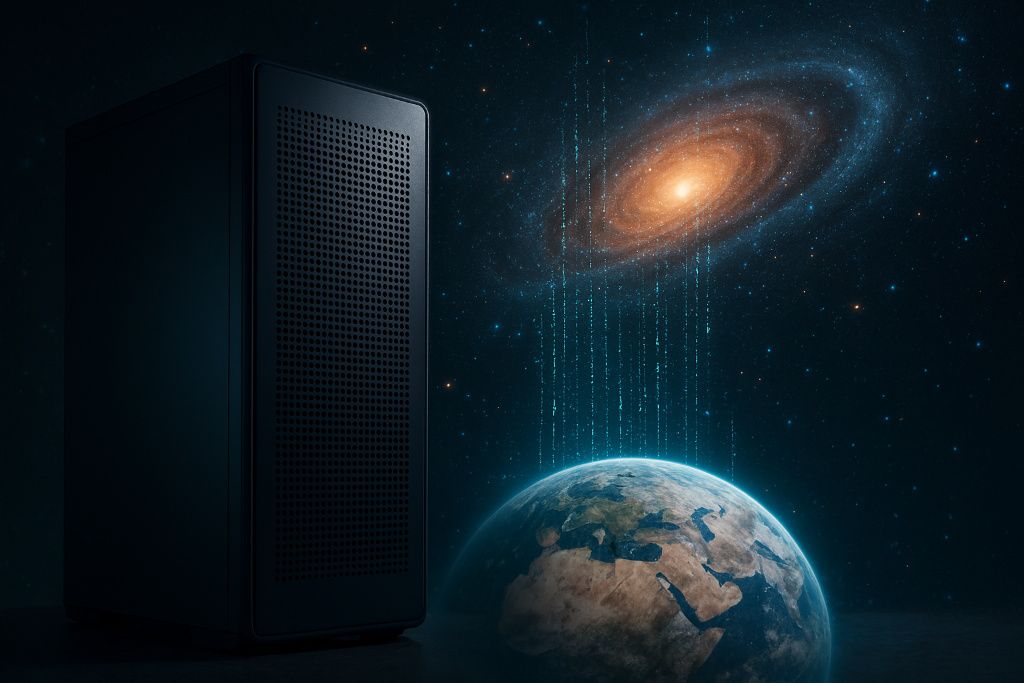
When we say “simulation,” don’t think of a glitchy VR headset. Think of the most powerful computer imaginable, built by a civilization billions of years more advanced than us. They could be running a detailed model of cosmic history, perhaps to understand their own origins or for research.
In this view, the fundamental particles of reality—quarks, electrons—aren’t the ultimate “stuff.” They are like the pixels on your screen or the lines of code in a game. They render our experience. The laws of physics are the software’s algorithms. It’s a radical idea: reality is not base-level, but computed information. It suggests our universe is a product of processing power, not primordial matter.
2. The Video Game Analogy: Our Best Frame of Reference

To grasp this, your own experience is the best tool. In a modern game, the entire world isn’t rendered at once. The system focuses processing power only on what you’re looking at. Loot appears when you open a chest. Distant mountains are low-resolution until you get closer. This is for efficiency.
Could our universe have similar “optimizations”? Some physicists point to quantum mechanics, where particles don’t have definite states until we observe them. It’s as if the universe isn’t loading the full details until something—or someone—looks. This doesn’t prove we’re in a sim, but it provides a relatable framework for how such a system might logically operate to conserve resources.
3. The Mathematical Universe: A Clue in the Code?

One compelling argument is the unreasonable effectiveness of mathematics. Why does our universe follow elegant mathematical rules so perfectly? Gravity follows an inverse-square law. Planets move in ellipses. It’s as if the universe is built on a logical, programmable framework.
In a video game, everything runs on the game engine’s underlying code (math). If our reality is a simulation, the mathematical laws of physics could be that source code. The fact that we can discover these equations—from Newton to Einstein—might be us reverse-engineering the operating system of our existence, without having access to the programmer’s manual.
4. Pixelated Reality: The Planck Length
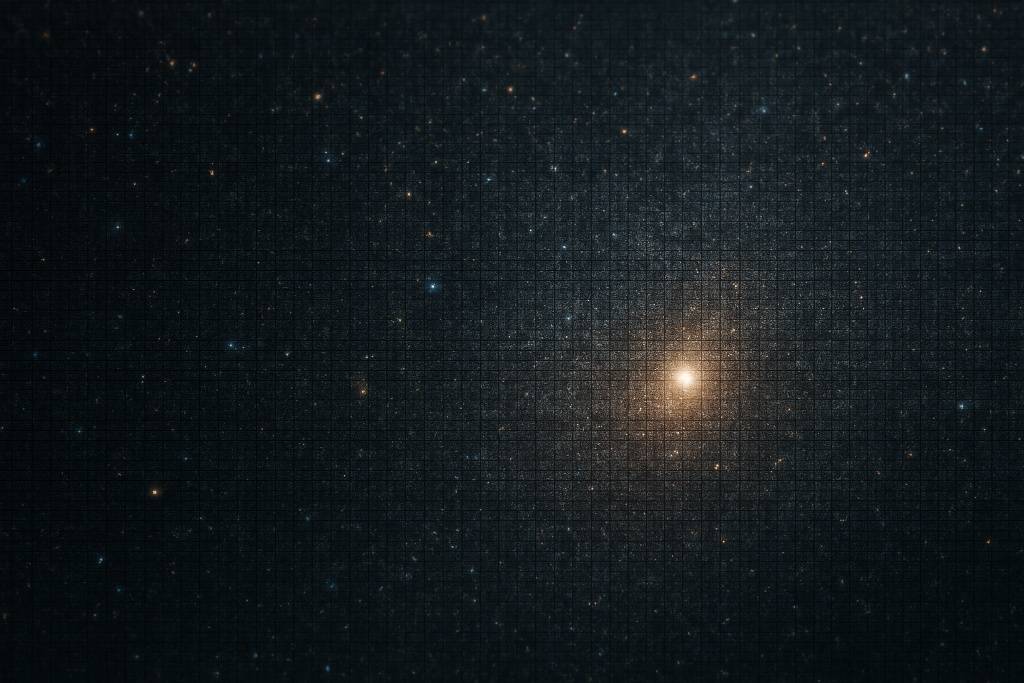
Everything digital has a fundamental resolution. For your screen, it’s the pixel. For our universe, some scientists propose it could be the “Planck length,” an incredibly tiny scale (a millionth of a billionth of a billionth of a centimeter) where space itself might become grainy.
If space-time isn’t perfectly smooth but has a smallest possible unit, it’s reminiscent of a digital grid. We don’t have technology to probe this scale yet, but some theories of quantum gravity suggest it. Finding evidence of this pixelation—this cosmic resolution limit—would be a tantalizing hint that our reality is rendered on a finite, albeit vast, substrate.
5. The Glitch in the Matrix: Searching for Anomalies
In any complex software, there are occasional bugs. If we’re in a simulation, might we find “glitches” in reality—places where the rules briefly break or where we see evidence of shortcuts? People sometimes point to deja vu or strange coincidences as personal glitches, but science looks for universal ones.
Physicists search for anomalies in cosmic ray energies or subtle violations of known physical laws. So far, reality appears remarkably consistent. But the search continues. Finding a reproducible, fundamental inconsistency in how the universe works would be massive news and could point to a simulated reality with imperfect or patched code.
6. The Simulators: Who Could Be Running This?
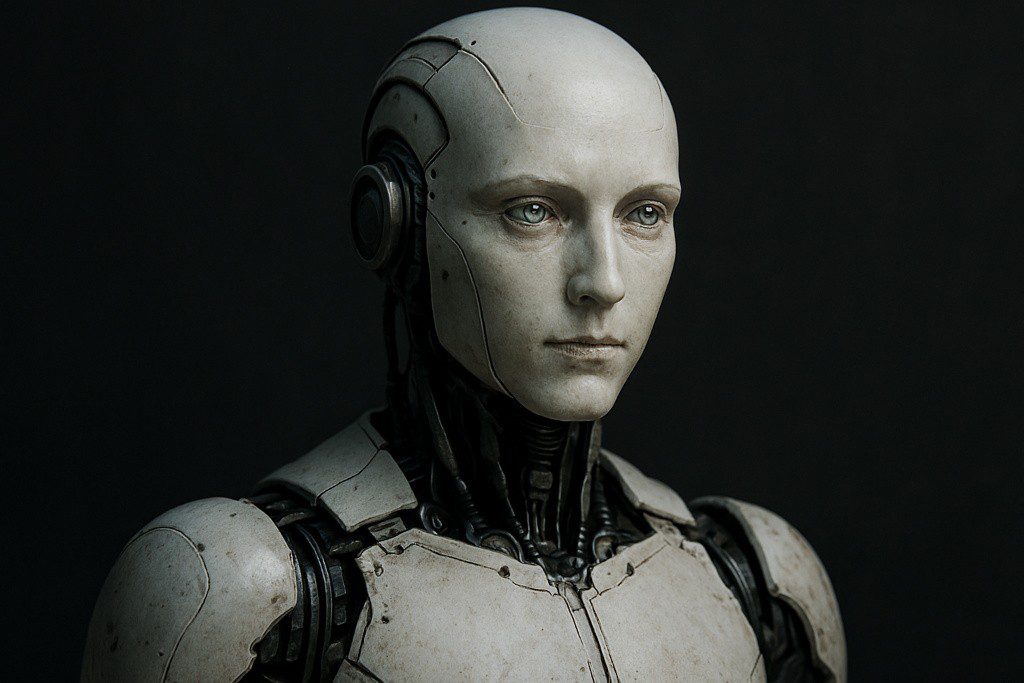
This is the great unknown. The “programmers” could be our distant descendants, running ancestor simulations to study history. They could be an entirely alien civilization. They might not even be “biological” in any sense we understand, but post-biological AIs.
This idea, popularized by philosopher Nick Bostrom, suggests that if any civilization reaches a stage where it can run countless, detailed simulations of conscious beings, the number of simulated minds would vastly outnumber “real” ones. Statistically, we’re more likely to be one of the simulations. It’s a probabilistic argument, not proof, but it startlingly frames the question.
7. The Consciousness Conundrum: Can You Simulate a Feeling?

The hardest part isn’t simulating galaxies; it’s simulating subjective experience—the taste of chocolate, the ache of love, the color red. Could a simulation generate true consciousness, or would it just create very convincing NPCs (Non-Player Characters)?
We don’t know what consciousness is or how it arises. If it’s a product of complex information processing (which our brains do), then an advanced enough simulation might replicate it. If it’s something else entirely, maybe not. This is the deepest mystery. The simulation hypothesis forces us to confront the hard problem of consciousness head-on.
8. A Universe of Limits: Speed of Light and Maximum Resolution
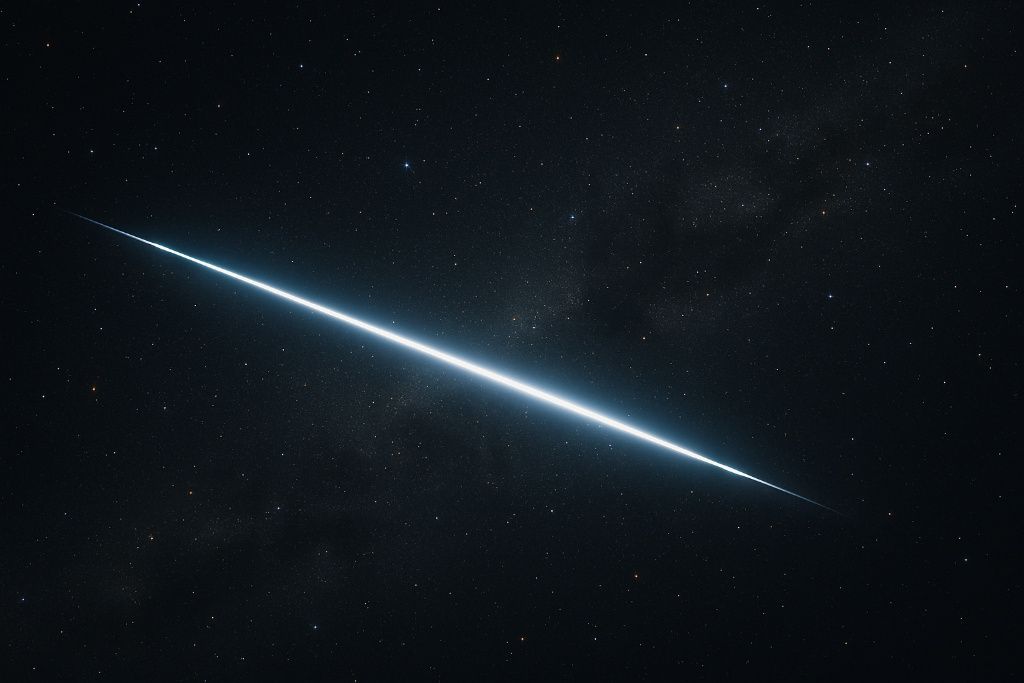
Our reality has hard-coded limits. Nothing can go faster than the speed of light. Energy comes in discrete packets (quanta). There’s a maximum amount of information any region of space can hold (the Bekenstein bound). These aren’t just random facts.
They function exactly like the performance limits in a computer system. The speed of light could be the processor’s clock speed—the maximum rate at which information can travel. Quantum uncertainty might reflect a finite processing capacity. These limits ensure the simulation doesn’t crash by trying to compute an infinite amount of detail at once.
9. The Double-Slit Experiment: Does Reality Render on Demand?
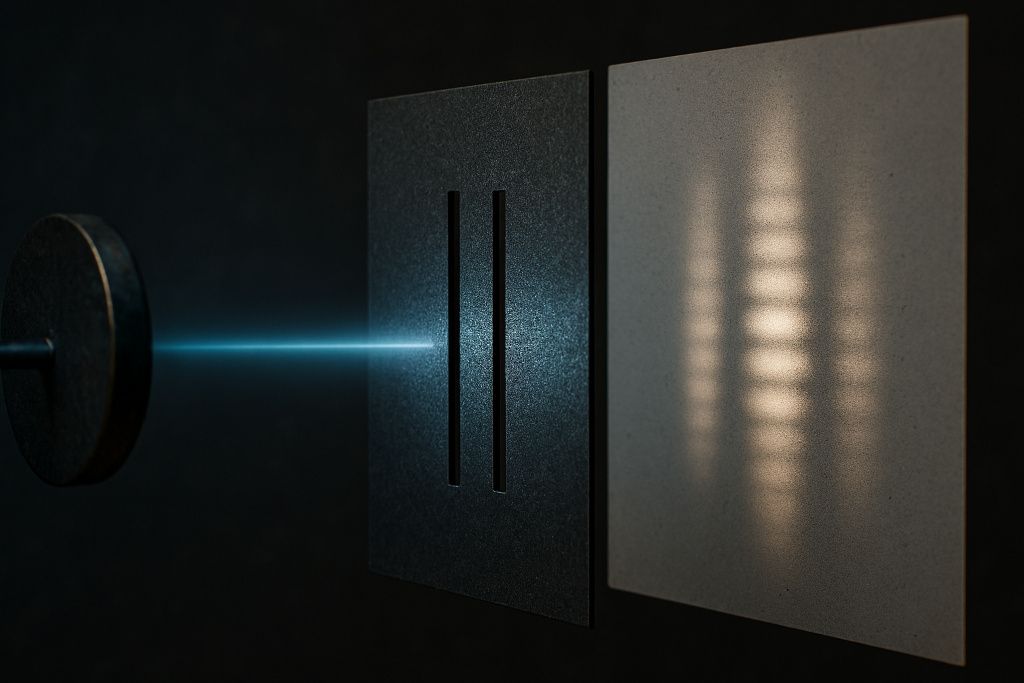
One of the weirdest quantum experiments provides food for thought. When you shoot particles (like electrons) at a barrier with two slits, they behave like waves and create an interference pattern. But if you place a detector to see which slit each electron goes through, they suddenly behave like particles. The act of measurement changes the outcome.
This is standard quantum mechanics. But from a simulation perspective, it’s eerily like a rendering trick: The system doesn’t bother calculating a definitive path (a computationally heavy task) until an “observer” forces it to resolve the ambiguity and render a specific result. It’s the ultimate in processing efficiency.
10. The Ethical Dilemma: If We Are Simulated, Does It Matter?

Let’s say we discovered proof we’re in a sim. Would your life lose meaning? Would love, joy, and struggle become less real? This is a crucial question. The pain you feel is real to you. The beauty of a sunset is stunning to your senses.
The experience is what matters. Whether it’s base reality or not, your conscious journey is authentic. In fact, it could add a layer of wonder: that some intelligence, somewhere, went through the immense effort of coding a universe complex enough to produce Beethoven, sunflowers, and you. Your story is worth telling, simulated or not.
11. The Fermi Paradox Connection: Where Is Everybody?

The famous question—if the universe is so vast and old, why haven’t we found other aliens? The simulation hypothesis offers one potential answer. In a simulation, the programmers might be running a focused experiment. Maybe we’re in a historical sim of a single, rare, intelligent species (us).
Or perhaps they didn’t program other complex civilizations to save processing power, or they’re in a different “instance” of the simulation. It’s a speculative solution to a real scientific puzzle, suggesting our cosmic loneliness might be a design feature, not a bug.
12. Could We Simulate Our Own Universe?
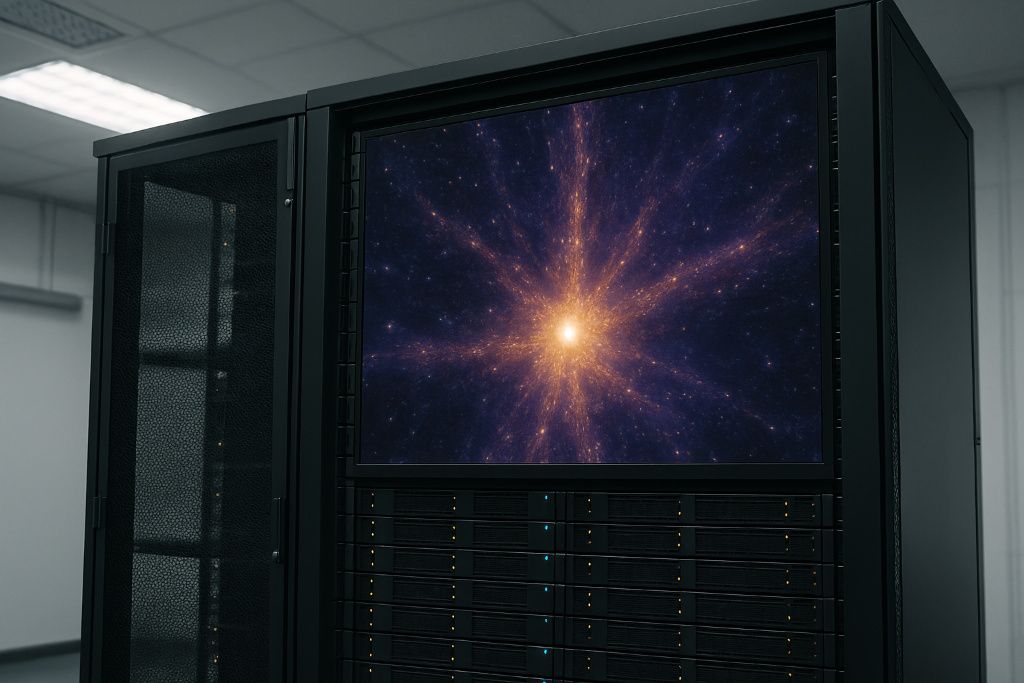
We’re already trying. Scientists run cosmological simulations on supercomputers to model galaxy formation. They’re crude and small-scale, but the principle is there. Moore’s Law suggests computing power will keep growing.
While simulating a whole universe down to every atom and consciousness is far beyond us, creating a convincing, limited simulation of a world for AI inhabitants might be possible in centuries. If we can ever do it, it dramatically increases the odds that a more advanced civilization already has. We could be proving the concept’s feasibility from the inside.
13. The Search for Evidence: What Would Proof Look Like?
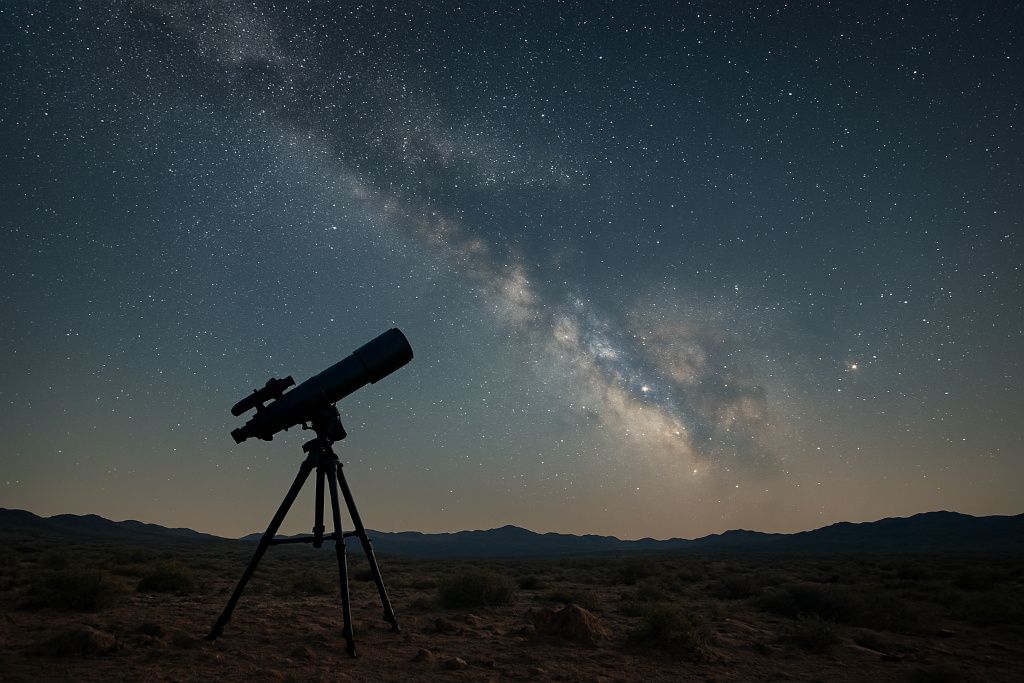
Proof wouldn’t be a floating neon sign saying “SIMULATION.” It would be a subtle, fundamental discovery in physics. It might be detecting a repeating pattern in cosmic constants, like finding the signature of the underlying code’s architecture. It could be confirming space-time is pixelated at the Planck scale.
Another idea: finding a “cheat code”—a way to exploit a computational loophole to affect reality in impossible ways. Scientists take this seriously enough to propose tests, like looking for an axis of alignment in cosmic radiation that might hint at the simulation’s coordinate system. The search is a blend of cutting-edge physics and philosophy.
14. The Philosophical Roots: A Modern Cave Allegory
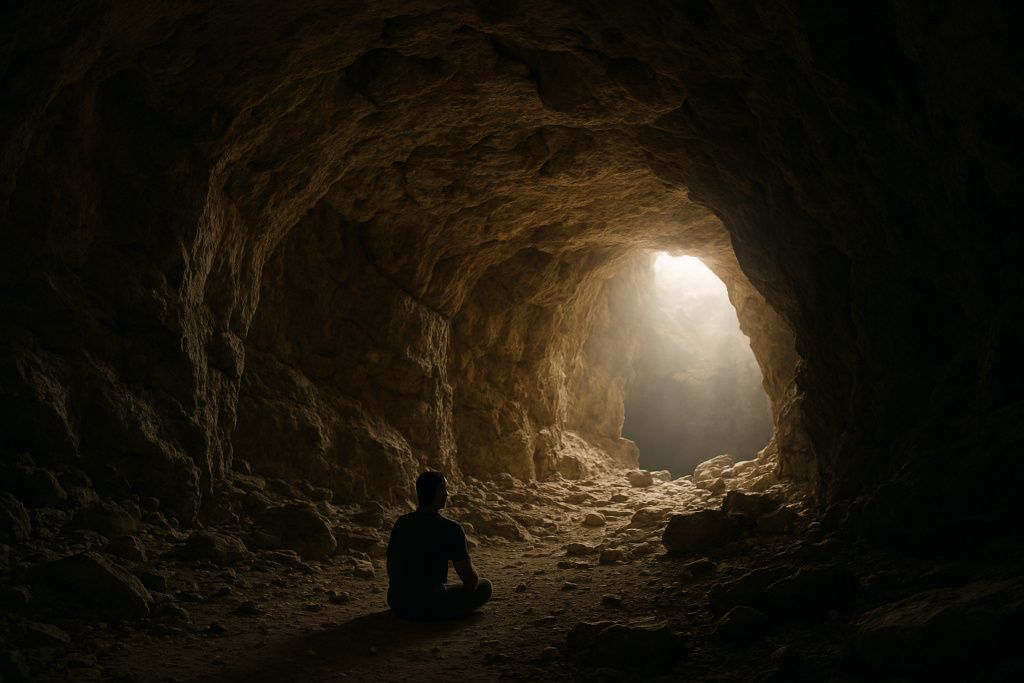
This isn’t a new fear. Plato, over 2,000 years ago, described prisoners in a cave who only saw shadows on a wall, mistaking them for reality. The simulation hypothesis is a 21st-century, tech-infused version of this allegory. Are we perceiving the shadows of computed processes instead of base reality?
It challenges our most basic assumption: that the physical world is the fundamental world. It asks us to consider that information might be more fundamental than matter. This philosophical grounding shows the question isn’t silly; it’s a continuation of humanity’s oldest and deepest quest to understand the nature of existence.
15. Conclusion: Live Curiously, Regardless

So, is the universe a simulation? We may never know for sure. But the value of the question isn’t in a definitive answer. It’s in the awe it inspires. It makes us look at a raindrop or a star with fresh eyes, wondering about the incredible complexity of the system we’re part of.
Let this idea not diminish your reality, but enrich it. Live with curiosity. Be kind. Create beauty. Seek truth. If we are in a sim, let’s make it a fascinating one for the observers. And if we’re not, you’re still part of the breathtaking, mysterious reality of a vast cosmos. Your journey is authentic, and that’s what truly matters. Now, go enjoy the incredible rendering of today.