
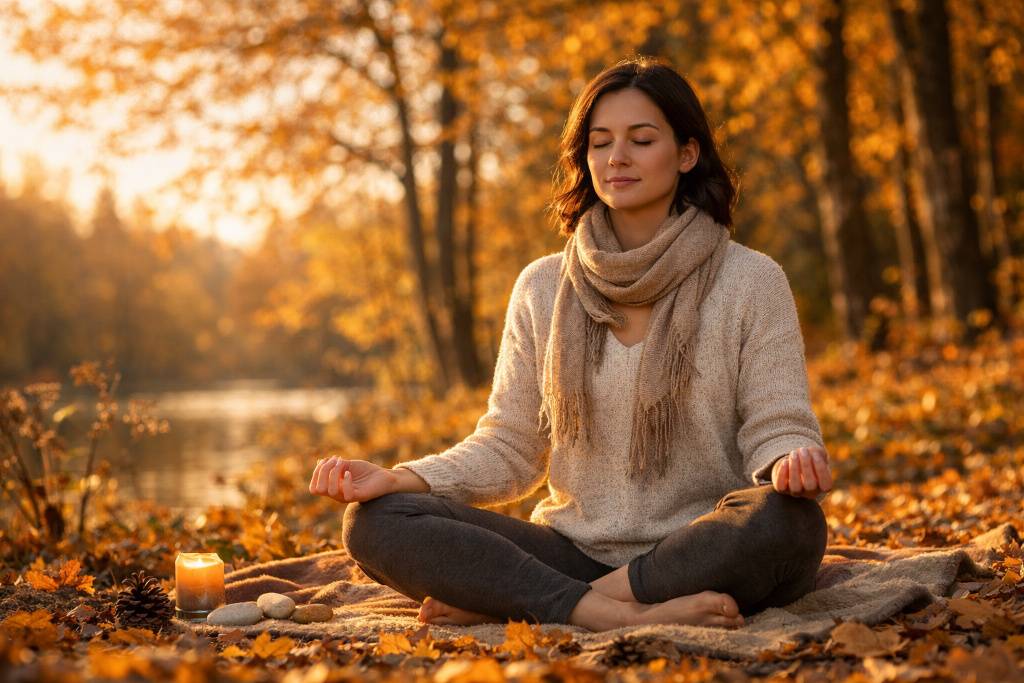
This guided meditation on how to practice mindfulness for anxiety is designed specifically for meditation professionals who support clients experiencing stress, emotional overwhelm, or persistent anxious thoughts. Learning how to practice mindfulness for anxiety allows you to guide clients toward present-moment awareness, helping them regulate their nervous system and observe anxious thoughts without judgment.
You can use this session to demonstrate how to practice mindfulness for anxiety in a structured and supportive setting, whether in private sessions, group classes, or recorded meditation offerings. The pacing and language of this practice are intentionally designed to help clients gently experience how to practice mindfulness for anxiety through breath awareness, grounding sensations, and compassionate observation of their thoughts. With consistent practice, clients can begin integrating how to practice mindfulness for anxiety into daily life, developing emotional steadiness, clarity, and a deeper sense of calm.
Let’s get started.
How to Practice Mindfulness for Anxiety: Guided Meditation Script
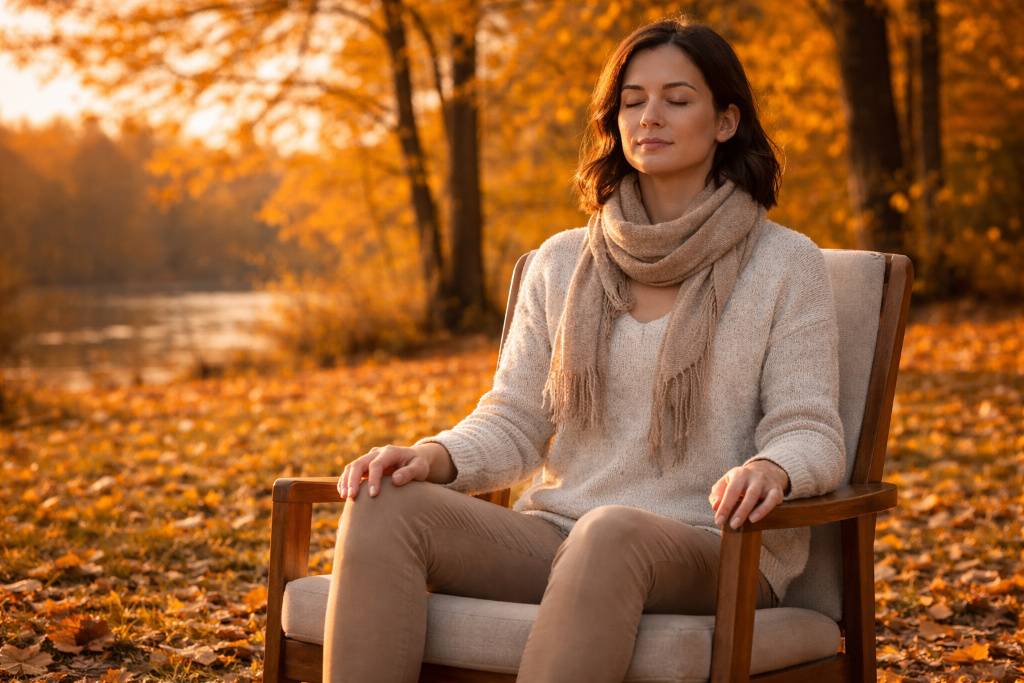
Begin by finding a comfortable position. You may sit upright with your feet resting gently on the ground, or lie down if that feels more supportive for your body. Allow your hands to rest softly wherever they feel natural.
Take a slow, gentle breath in through your nose.
And exhale slowly through your mouth.
Allow your breathing to settle into its own natural rhythm. There is nothing you need to change or control. Simply notice the breath as it moves in and out of your body.
As you begin this practice of how to practice mindfulness for anxiety, gently bring your awareness to the present moment. Notice the sensations of your body where it meets the chair, the floor, or the surface beneath you. Feel the steady support of the ground holding you.
Take another slow breath in.
And exhale softly.
Anxiety often pulls the mind toward the future, filling it with “what if” thoughts and imagined scenarios. In this moment, mindfulness invites you to come back to what is real right now—your breath, your body, and this quiet moment of awareness.
Notice the simple movement of breathing.
Feel the air entering your nose.
Feel your chest or belly rise gently.
And feel the soft release as you exhale.
This gentle awareness is the foundation of how to practice mindfulness for anxiety. Rather than trying to force anxious thoughts away, you simply observe what is happening with patience and kindness.
Now imagine your thoughts as clouds drifting across a wide, open sky. Some clouds may move quickly, others may linger for a while. But the sky itself remains calm, spacious, and steady.
Your awareness is like that sky.
Thoughts may come and go, including anxious ones, but they do not define the calm space of your awareness. As you continue breathing, simply notice any thoughts that appear and allow them to pass naturally without chasing them or pushing them away.
If your mind wanders, gently guide your attention back to your breath. Each return is a small act of mindfulness and care for yourself. This simple return is one of the most powerful elements of how to practice mindfulness for anxiety.
Now bring your awareness into your body.
Notice any areas where tension may be present—perhaps in your shoulders, your jaw, or your stomach. Anxiety often settles in these places without us realizing it.
With your next breath in, gently acknowledge that tension.
And as you breathe out, imagine the tension softening just a little.
There is no need to force anything to change. Simply allow your breath to create a sense of space within the body.
Now shift your attention to the feeling of your feet touching the ground or the support beneath you. Notice the stability there. Feel how the earth holds you steadily and quietly.
Grounding your awareness in physical sensations is another important part of how to practice mindfulness for anxiety, helping the mind move away from racing thoughts and back into the body.
Take a moment to simply sit with this grounded feeling.
Breathing in calm.
Breathing out tension.
If anxious feelings arise, gently acknowledge them with kindness. You might silently say to yourself, “I notice anxiety is here right now.” This simple recognition creates space between you and the feeling.
Instead of fighting the anxiety, allow it to exist for a moment while you continue to breathe calmly and steadily. This compassionate awareness is at the heart of how to practice mindfulness for anxiety, reminding us that emotions are temporary experiences rather than permanent states.
Now imagine your breath as a soft wave flowing in and out. With every inhale, the wave rises gently. With every exhale, the wave falls back into the calm ocean.
Let your breathing become smooth and steady like this natural rhythm.
With each breath, feel a little more space opening inside your body and mind. Notice any small shifts—perhaps a slight softening of tension, or a sense of quiet beginning to appear.
Mindfulness does not ask you to eliminate anxiety instantly. Instead, it teaches you how to stay present with compassion and patience, allowing calm to grow naturally over time.
Take three slow breaths now.
Inhale slowly.
Exhale gently.
Again, inhale deeply.
Exhale with ease.
One more time.
Breathing in calm and awareness.
Breathing out tension and worry.
Begin to bring your attention back to your surroundings. Notice the room around you, the sounds nearby, and the feeling of your body where you are resting.
Gently move your fingers and toes, allowing small movements to return to your body.
When you feel ready, softly open your eyes.
Carry this calm awareness with you into the rest of your day. Each time anxiety appears, remember that you can return to your breath and to the present moment. With practice, mindfulness becomes a steady companion, guiding you toward balance, clarity, and inner calm.