
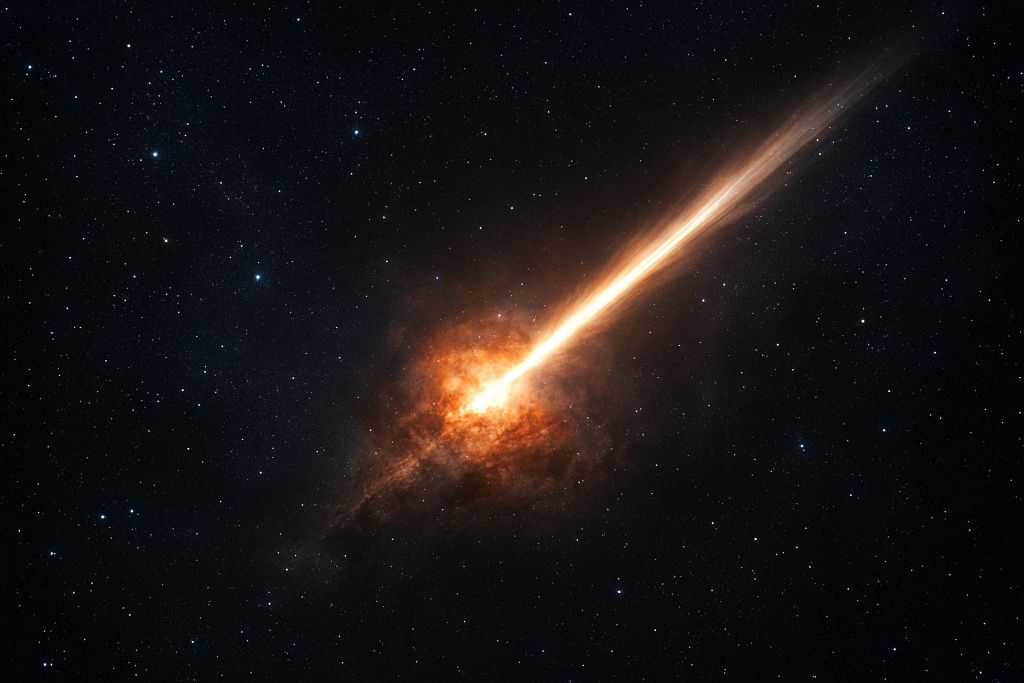
Look up at the night sky. It seems so peaceful. But hidden in that quiet darkness are the most powerful explosions since the Big Bang itself: Gamma-Ray Bursts. Think of the Sun. Now imagine squeezing its entire 10-billion-year energy output into just a few seconds.
That’s the raw, terrifying power of a GRB. They are fleeting cosmic screams, telling stories of stellar death and rebirth. While they happen incredibly far away, their story is part of our own. Let’s explore these astonishing events that remind us the universe is alive, violent, and full of wonder.
1. What Exactly is a Gamma-Ray Burst?
A Gamma-Ray Burst (GRB) is a short, incredibly intense blast of the highest-energy light in the universe. Picture it as the universe’s ultimate flashbulb. For a few seconds, this single event can outshine every star in its entire galaxy combined. It’s not a slow burn like a star; it’s a sudden, catastrophic release of energy.
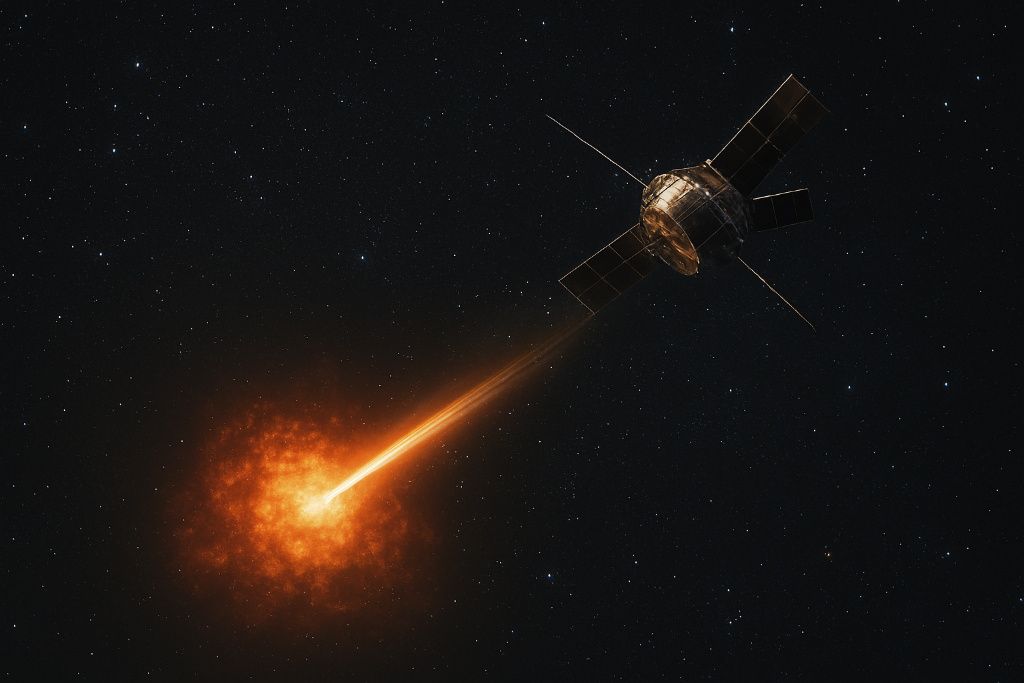
We detect them as a sharp spike on satellite sensors—a quick shout of gamma rays that then fades away. They come from random directions, making them unpredictable cosmic surprises that signal some of the most violent events imaginable.
2. A Totally Accidental Discovery
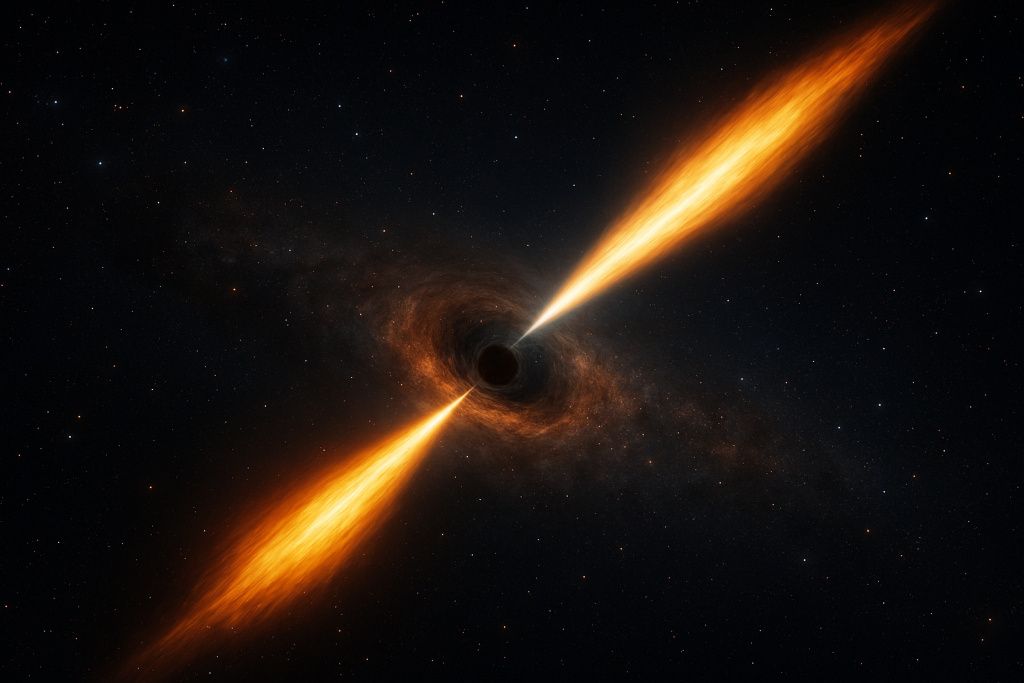
We stumbled upon GRBs by accident. In the late 1960s, U.S. Vela satellites were launched to monitor for secret nuclear tests in space. They didn’t find bombs. Instead, they found mysterious bursts of gamma rays coming from deep space!
The data was so strange that scientists spent years checking it before announcing the discovery in 1973. It was a complete surprise. This story reminds us that some of the biggest discoveries happen when we’re looking for something else entirely. The universe is always ready to amaze us.
3. The Two Flavors: Long and Short
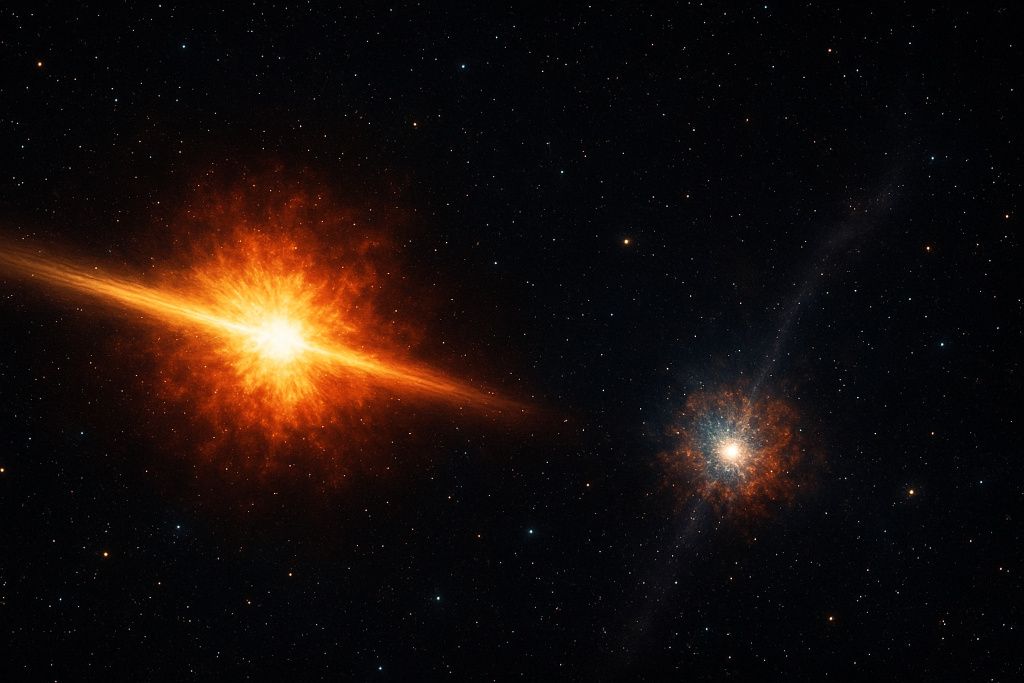
GRBs come in two main types, like different kinds of fireworks. Long GRBs last more than two seconds (sometimes minutes). These are the death cries of massive stars collapsing into black holes. Short GRBs are briefer than two seconds, often just milliseconds.
These are the result of two ultra-dense neutron stars smashing together. The difference is in the “engine” causing the explosion. Knowing this helps astronomers immediately know what kind of cosmic catastrophe they’re witnessing, just by timing the flash.
4. The Mind-Blowing Power Source
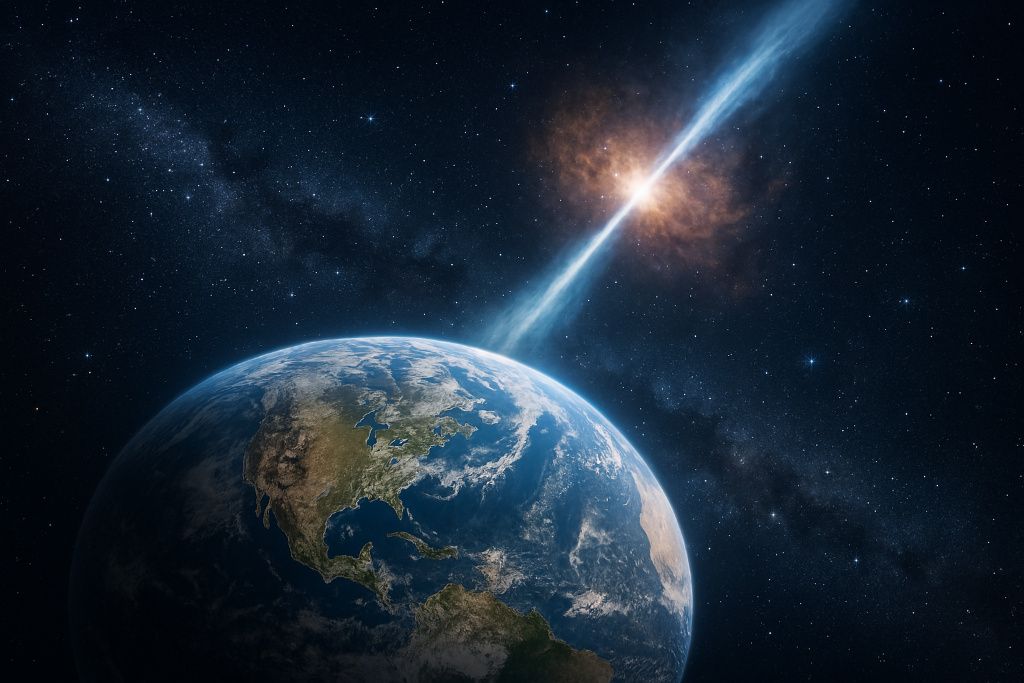
The energy is almost impossible to grasp. A single GRB can release more energy in ten seconds than our Sun will in its entire lifetime. This power comes from gravity’s ultimate victory. Whether it’s a star core collapsing or neutron stars merging, matter is squeezed into a newborn black hole.
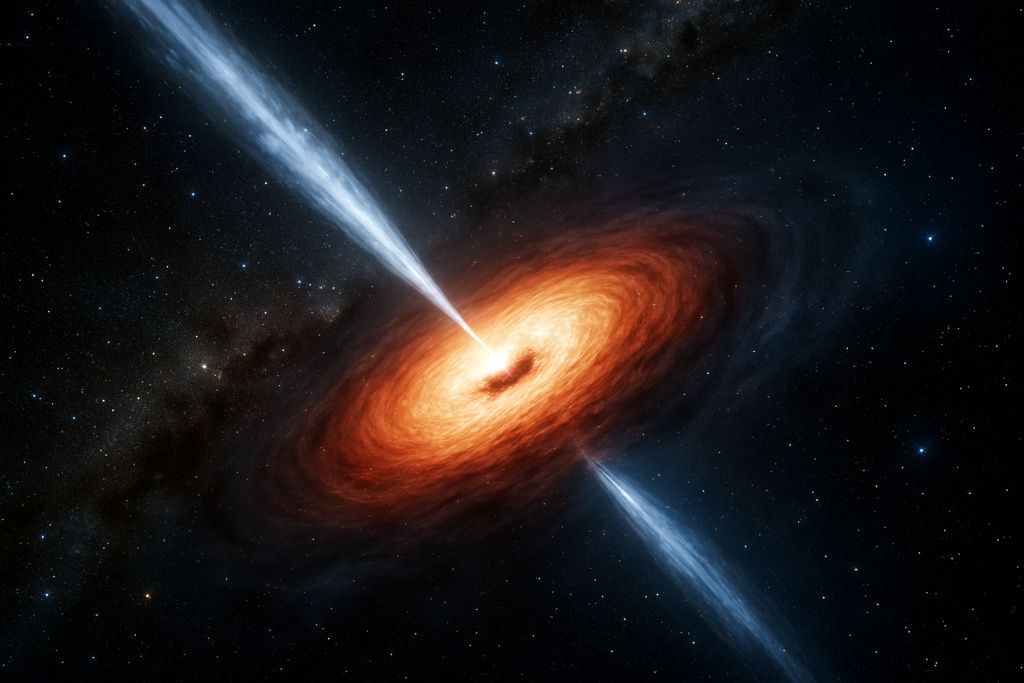
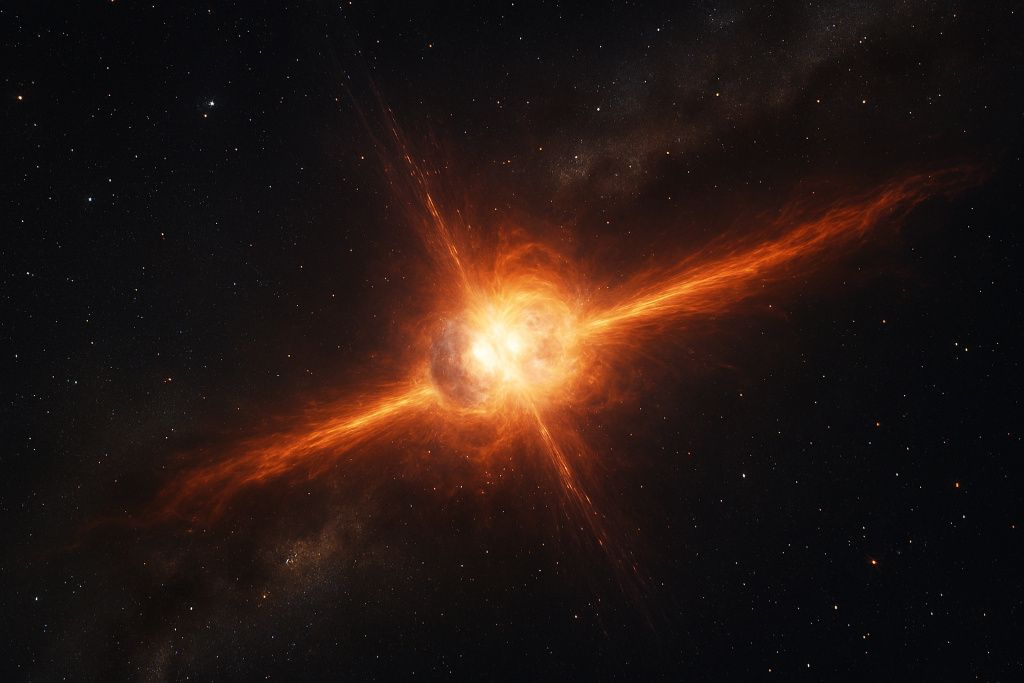
Infalling material gets funneled into two narrow, opposing jets that move at almost the speed of light. The incredible burst we see is the energy from these jets, focused like a cosmic blowtorch. We only see it if one jet is pointed directly at Earth.
5. The Cause of Long Bursts: Hypernova
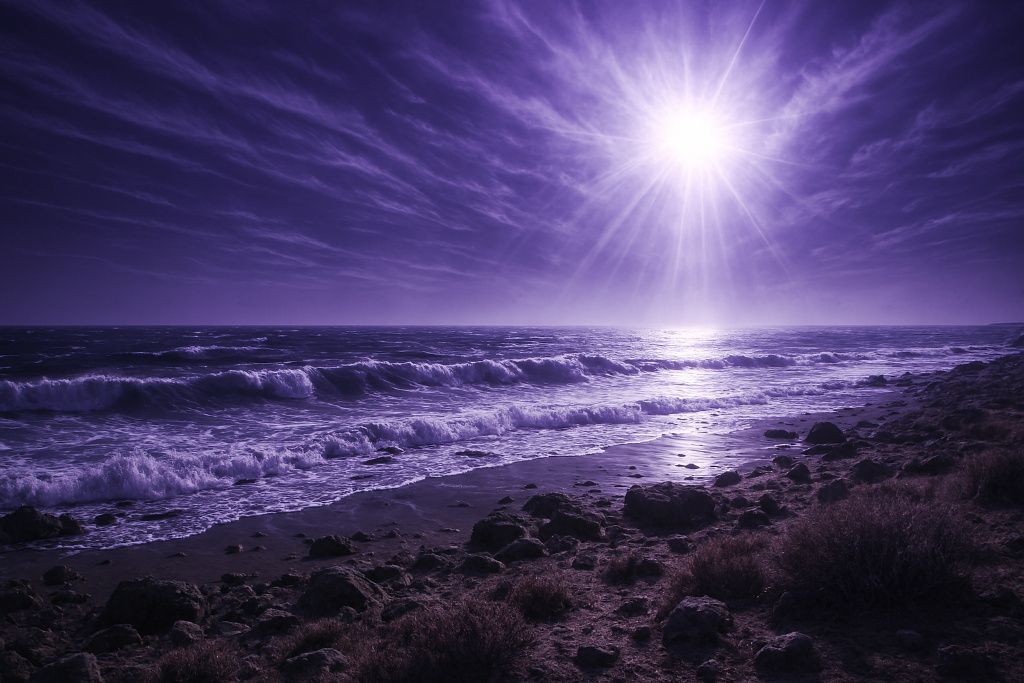
A long GRB starts with a giant star, at least 20 times the mass of our Sun. When its core runs out of fuel, it collapses under its own weight. This isn’t a normal supernova—it’s a “hypernova.” The core doesn’t stop at a neutron star; it keeps collapsing into a black hole.
As matter violently swirls into this new black hole, powerful magnetic fields and physics channel some of it into those two high-speed jets. The jets drill through the dying star and blast out into space, creating the gamma-ray burst we observe from afar.
6. The Cause of Short Bursts: Neutron Star Collision
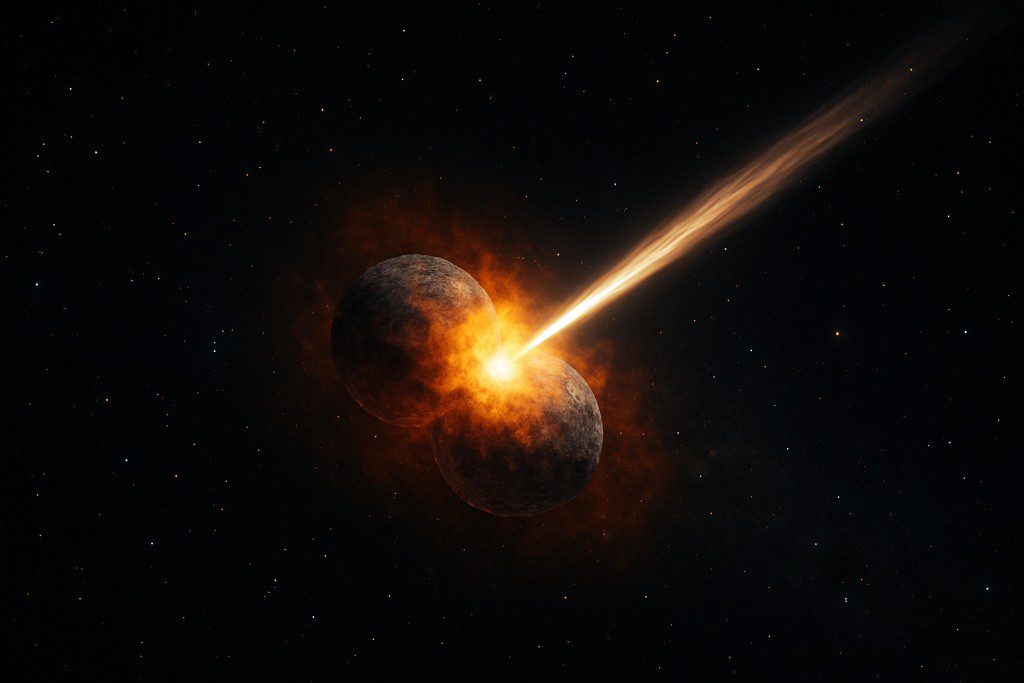
Imagine two city-sized objects, each heavier than our Sun, made of pure neutron star material. They orbit each other, slowly spiraling closer over millennia. When they finally collide, it’s one of the most violent events in the universe.
The merger creates a black hole (or a super-heavy neutron star) surrounded by a hot, dense wreckage of matter. This material, spinning furiously, launches the short, focused jets that produce the brief gamma-ray flash. This event also shakes spacetime, creating gravitational waves we can now detect.
7. The Crucial Afterglow: Our Chance to Study It
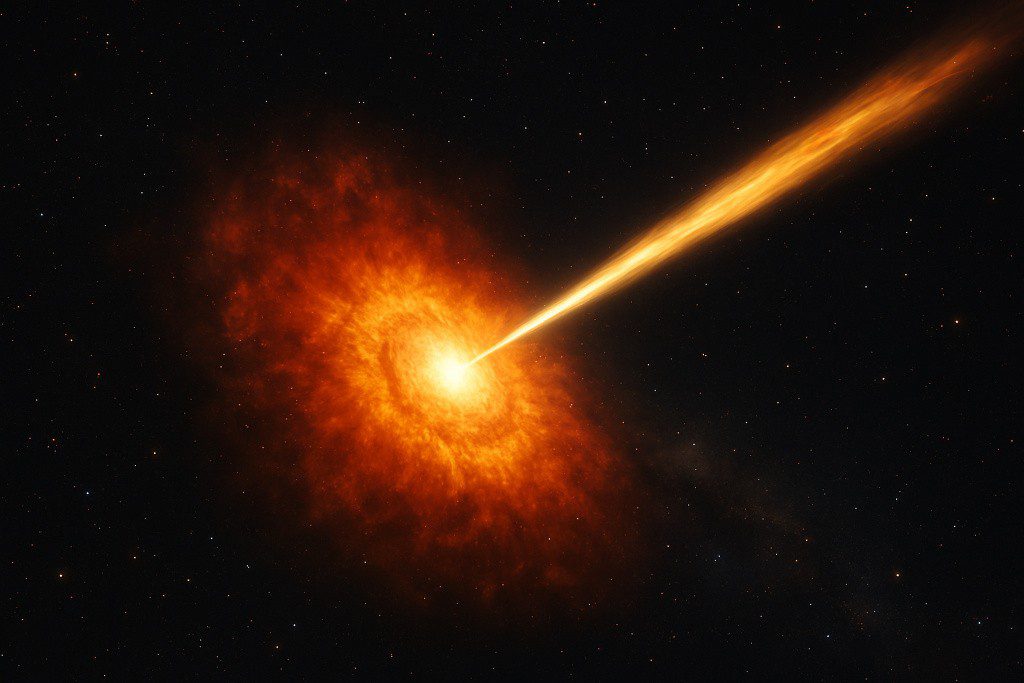
The initial gamma-ray flash is over too fast to study. The real gift for astronomers is the afterglow. When the GRB’s jets slam into the thin gas of interstellar space, they create a secondary, longer-lasting explosion. This afterglow shines in X-rays, visible light, and radio waves for days or weeks. It acts like a fading beacon, allowing ground telescopes to swivel to the spot, pinpoint its home galaxy, and study its chemistry. The afterglow is the crime scene investigation that follows the initial cosmic “bang.”
8. How We Detect Them: Space Sentinels
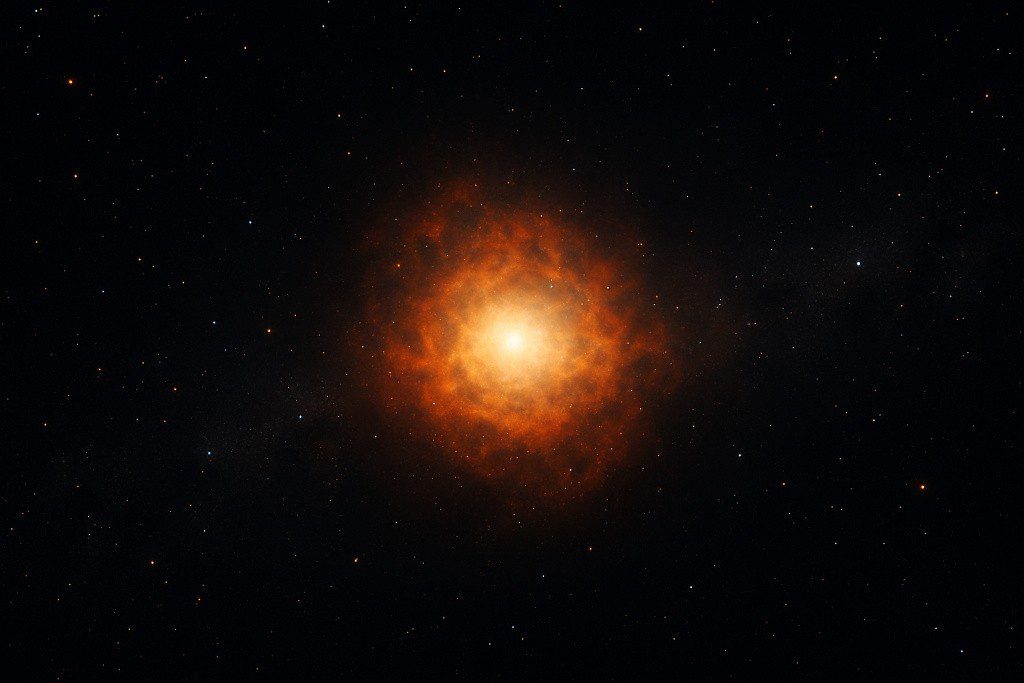
Earth’s atmosphere blocks gamma rays (which is great for us!). So, we need satellites in space to catch them. Missions like NASA’s Swift and Fermi are our dedicated watchdogs. When Swift detects a burst, it can spin around in under a minute to point its other telescopes at the afterglow.
It then instantly sends an alert to astronomers worldwide. Fermi watches the whole sky, measuring the energy of the gamma rays. These satellites give us a real-time window into the universe’s most energetic phenomena.
9. Could One Harm Earth? The Real Risk
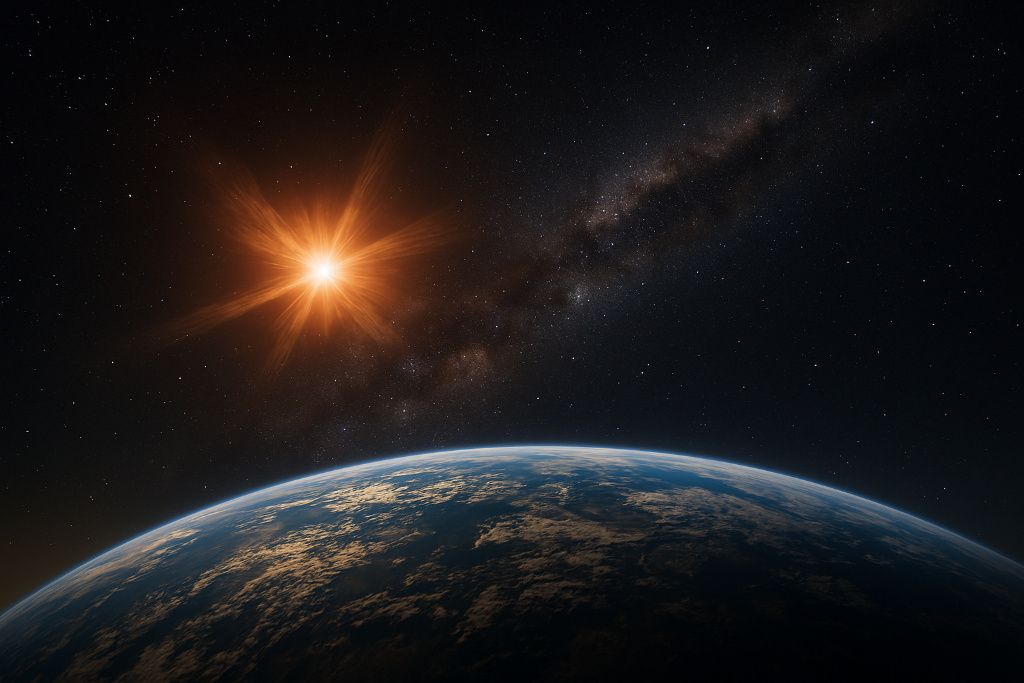
It’s a natural worry, but you can rest easy. For a GRB to seriously threaten Earth, it would need to be relatively close, AND its jet would have to be pointed directly at us. Both conditions are extremely unlikely. There are no potential “progenitor” stars in our galactic neighborhood ready to fire a jet our way. While a very nearby GRB could damage the ozone layer, the last time one might have brushed our planet was billions of years ago. The odds are astronomically in our favor for the foreseeable future.
10. A Role in Earth’s History?
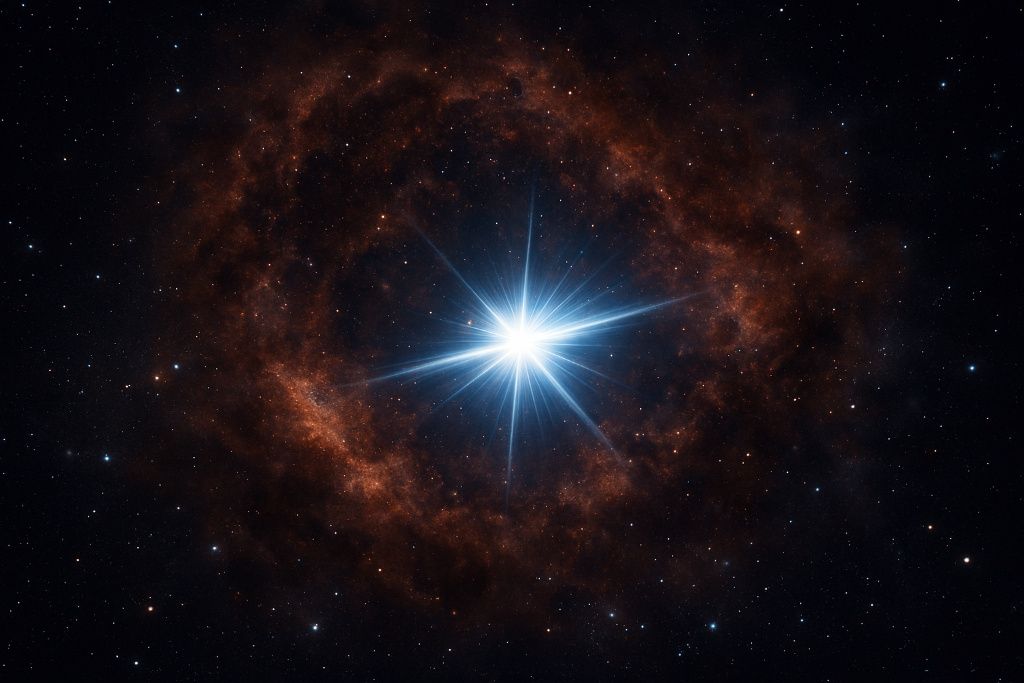
Scientists have a fascinating hypothesis. The Ordovician mass extinction, 440 million years ago, wiped out most sea life. One theory suggests a “nearby” GRB (within 6,000 light-years) could have been the culprit. The gamma rays wouldn’t burn the ground, but they could have chemically broken apart molecules in the upper atmosphere, severely damaging the ozone layer for years. This would have allowed deadly ultraviolet radiation from our own Sun to reach the surface, disrupting the food chain. It’s a reminder that cosmic events can shape life’s story.
11. Cosmic Forges: Creating Heavy Elements
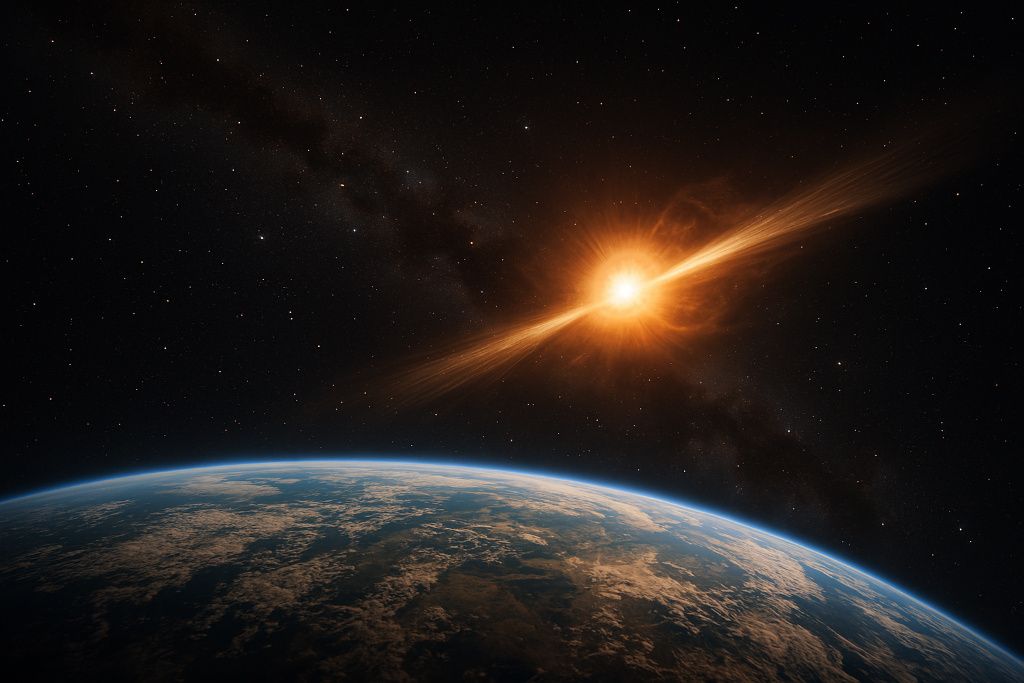
GRBs, especially from neutron star mergers, aren’t just destroyers; they’re also creators. The insane conditions in these collisions—immense heat and pressure—are perfect for forging the universe’s heaviest elements. The gold in your jewelry, the platinum in a catalytic converter, and uranium are likely created in these violent mergers.
The material ejected from the collision spreads through space, eventually becoming part of new stars and planets. In a very real way, these catastrophic events seeded the universe with the building blocks for rocky planets like Earth.
12. Unsolved Mysteries We’re Still Chasing
Despite decades of study, GRBs keep secrets. What is the exact “engine” mechanism inside the jets? Some bursts have weird features that don’t fit our models perfectly. What happens when a neutron star merges with a black hole? Each new detection, especially with gravitational wave data, helps us test our ideas. Science is a process of constant learning, and GRBs challenge our understanding of physics at its most extreme. Every new flash is a fresh puzzle to solve.
13. Why Studying Them Matters to You
You might wonder why we spend resources studying explosions billions of light-years away. First, they are natural laboratories for physics we can’t replicate on Earth, teaching us about gravity, matter, and energy. Second, their brilliant light acts as a beacon to illuminate the distant, early universe, letting us see the first galaxies. Finally, understanding these events helps us comprehend our own cosmic history—where the elements in our bodies came from and what forces shaped our galaxy.
14. How You Can Be a Cosmic Detective
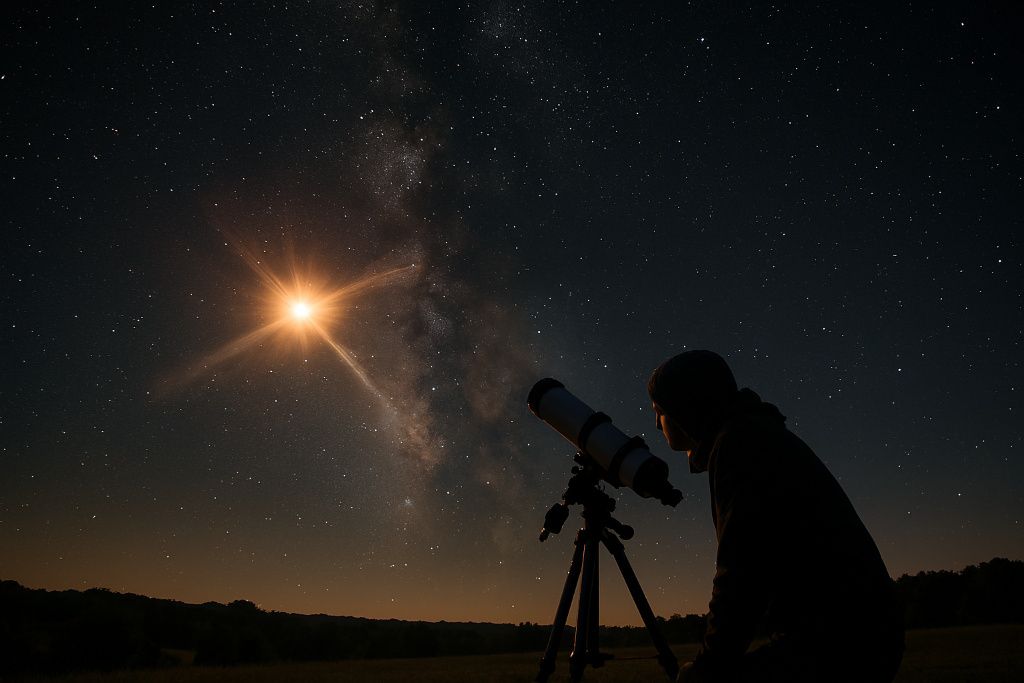
You can follow these discoveries in real-time! NASA’s Swift Mission website has a “GRB Follow-up” page for the public. Astronomers often post observations on social media like Twitter/X using hashtags like #GRB. Websites like SpaceWeather.com sometimes report on notable events. If a particularly bright afterglow happens, amateur astronomers with backyard telescopes might even see it. By following along, you become a witness to the most dramatic events in the cosmos, as they happen.
15. Conclusion: A Universe of Resilience
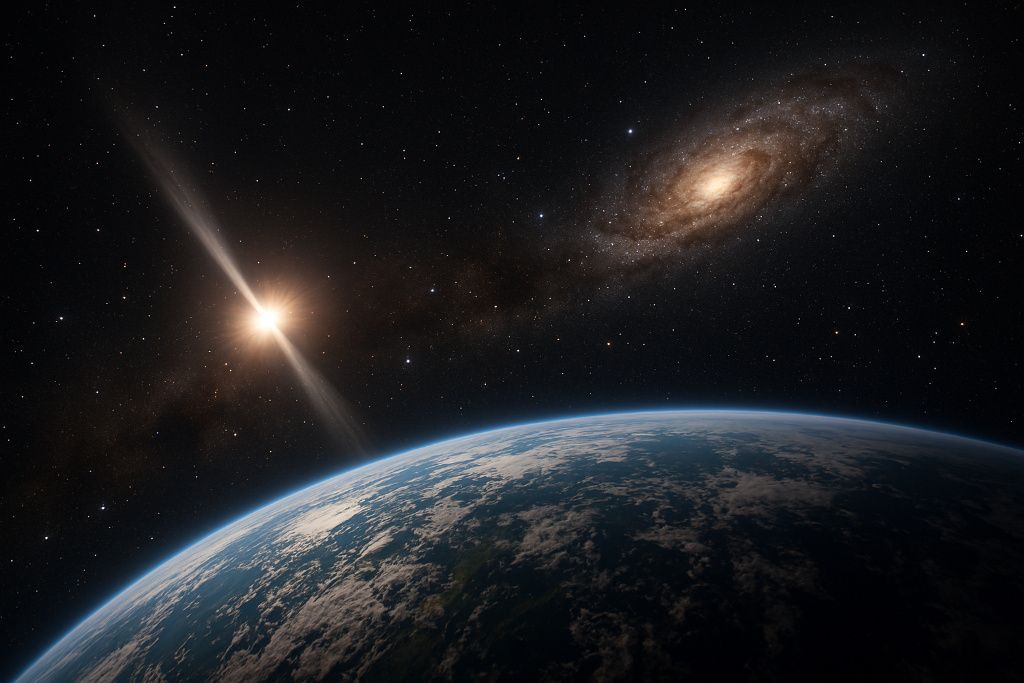
Gamma-Ray Bursts teach us a profound lesson about the universe: it is a place of both breathtaking violence and incredible creativity. From catastrophic ends come new beginnings—black holes, new elements, and new stories. For us, on our pale blue dot, they highlight our resilience.
We exist in a cosmos that can produce such fury, yet here we are, curious and clever enough to detect these flashes across the vast dark. We listen to the echoes of stellar deaths to understand our own origins. That quest for knowledge, in the face of such immense power, is a beautiful and hopeful thing. Keep looking up.