
Have you ever been stuck in traffic, wishing you could just zip to your destination instantly? Now, imagine wanting to visit another star. Even our fastest spacecraft would take tens of thousands of years to get there. That’s why light-speed travel captivates us.
It’s the universe’s ultimate speed limit, and the key to unlocking the cosmos. But is it just science fiction, or could it ever be real? The science behind it is mind-bending, challenging our very understanding of reality. Let’s embark on a journey to explore the thrilling possibilities and hard truths of traveling at the speed of light.
1. The Universe’s Speed Limit: Why 186,282 Miles Per Second?
Light-speed isn’t arbitrary; it’s a fundamental property of our universe. In a vacuum, like space, light always travels at 186,282 miles per second (299,792 km/s). We call this ‘c’ in physics. Think of it like this: nothing you see or experience happens instantly.
Light from your screen takes a tiny fraction of a second to reach your eyes. This speed limit isn’t just for light—it’s the maximum speed for any information or object in the cosmos. It’s woven into the fabric of space and time itself, a rule set by nature that keeps cause and effect in order.
2. Einstein’s Game Changer: Special Relativity
In 1905, a young Albert Einstein changed everything with his Theory of Special Relativity. It started with a simple idea: the speed of light is constant for everyone, no matter how fast you’re moving. This leads to wild consequences. As you move faster, time slows down for you relative to someone standing still (time dilation).
Also, your length in the direction of travel shrinks, and your mass increases. These aren’t mechanical failures; they are real, measurable effects of space and time bending to keep light’s speed constant. It’s why you can’t just keep accelerating to reach ‘c’.
3. The “Relativity” in Relativity: A Simple Thought Experiment
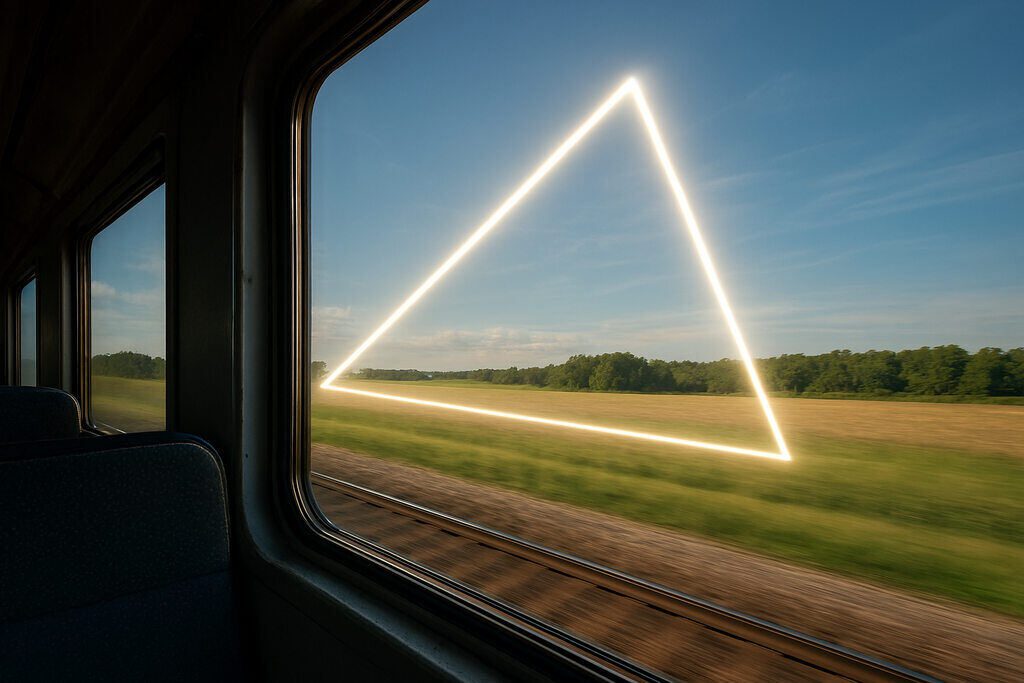
Imagine you’re on a train moving perfectly smoothly. You bounce a basketball straight up and down. To you, it goes straight. But to someone standing outside watching the train whiz by, the ball’s path looks like a triangle—it moves up and forward with the train. Both of you are correct about the ball’s path relative to your own viewpoint.
Now, replace the ball with a beam of light. No matter how fast the train goes, both you and the outside observer will still measure the light’s speed as the same. This is the core “relativity” of motion that baffles common sense but is proven true.
4. The Problem with “Mass Gets Infinite.
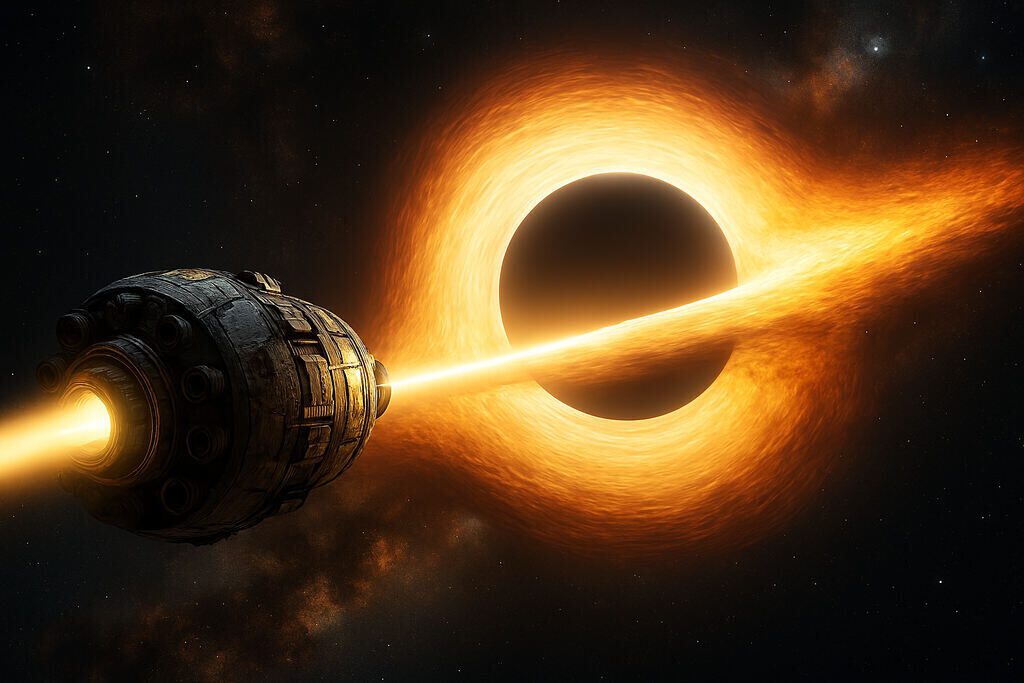
According to Einstein’s math, as an object’s speed approaches light speed, its relativistic mass increases. The closer you get to ‘c’, the more energy it takes to accelerate you just a little bit more. To actually reach light-speed, you’d need an infinite amount of energy—more energy than exists in the entire universe!
This is the ultimate physics roadblock for any object with mass, including spacecraft and us. It’s not an engineering problem; it’s a fundamental law. So, for now, light-speed travel for humans is a firm “no” within our current understanding.
5. Time Dilation: Your Sci-Fi Ticket to the Future
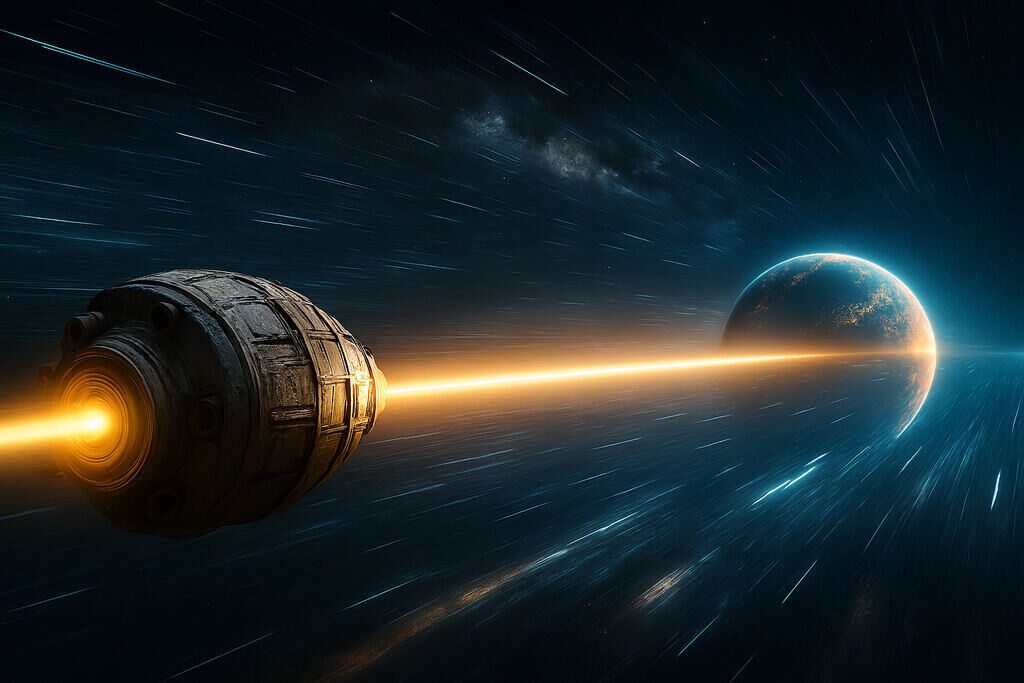
Here’s a silver lining! While we can’t reach light-speed, getting close to it has a fantastic side effect: time dilation. If you could travel at, say, 99.5% of light-speed to a star 10 light-years away, the trip might feel like only 1 year for you. But back on Earth, over 10 years would have passed. You’d return to a future Earth.
This isn’t a theory; it’s proven. Tiny particles called muons, created in the upper atmosphere, reach Earth’s surface because their high speed stretches their short lifetime from our perspective. For astronauts, the effect is minuscule, but at near-light speeds, it’s profound.
6. Warp Drives: Cheating the Speed Limit?
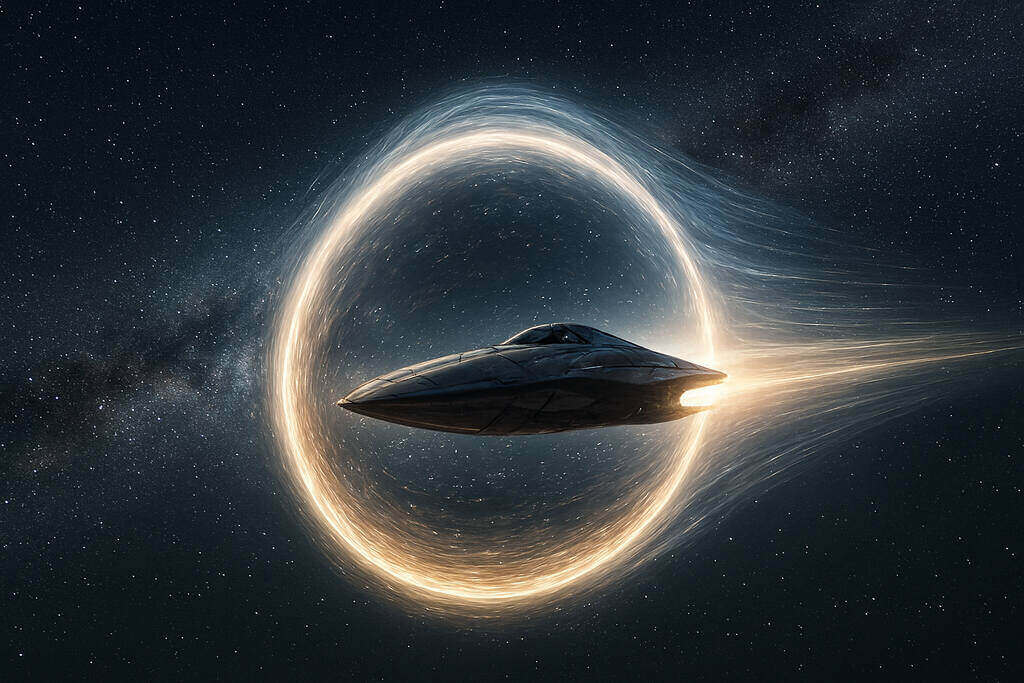
If we can’t move through space faster than light, what about moving space itself? That’s the idea behind a warp drive, popularized by theoretical physicist Miguel Alcubierre. Imagine a bubble of normal space-time around a ship. The drive would contract space in front of the ship and expand space behind it.
The ship itself sits still inside this “warp bubble,” not breaking any speed limits locally, while the bubble itself moves faster than light. It’s like a surfer on a wave, or moving a rug by scrunching it up—you move the fabric, not the object on it.
7. The Energy Problem for Warp Bubbles
The Alcubierre warp drive isn’t a free pass. The original math required something called “exotic matter”—a theoretical substance with negative mass or energy to bend space-time in the needed way. The estimated energy cost was astronomical, perhaps equivalent to the mass-energy of an entire planet like Jupiter.
More recent studies suggest ways to lower the energy requirement, but we have no proof that exotic matter even exists. The concept, however, keeps the idea alive within the realm of theoretical physics, showing that light-speed travel might require manipulating the stage (space-time) rather than the actor (the ship).
8. Wormholes: Cosmic Shortcuts
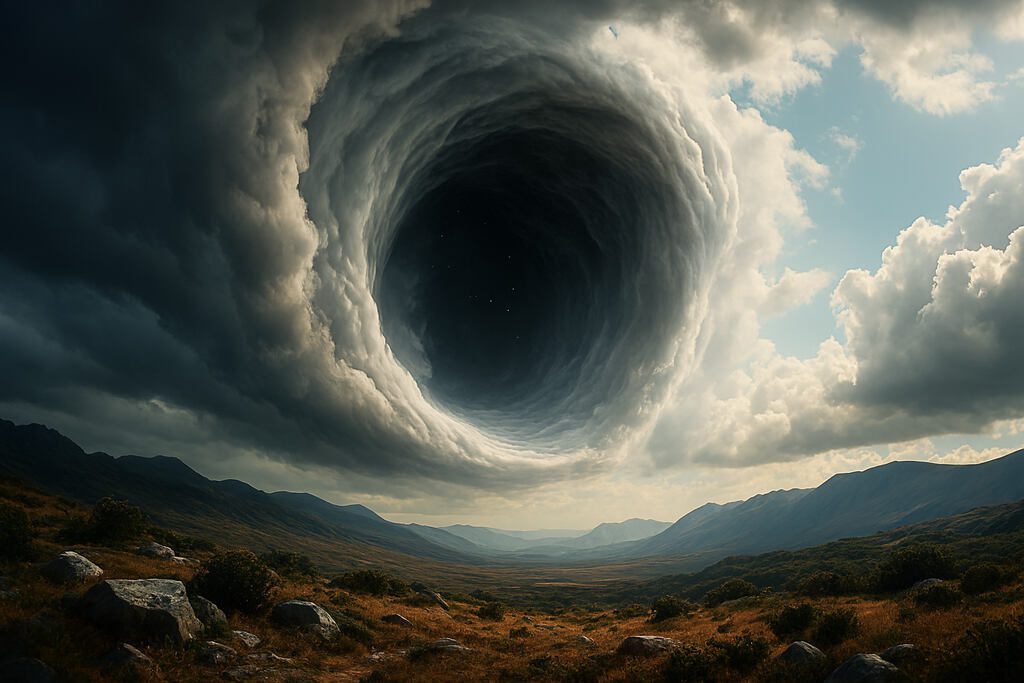
Another favorite concept is the wormhole—a theoretical tunnel connecting two distant points in space-time. Picture a folded piece of paper. A wormhole is like poking a pencil through to connect the far sides instantly. While allowed in Einstein’s equations of General Relativity, stable, traversable wormholes for humans would require the same exotic matter as warp drives to keep them from collapsing. They’d also be incredibly unstable. Even if they exist naturally, they’d likely be microscopic or snap shut instantly. Creating and controlling one is far, far beyond our current capabilities.
9. The Communication Challenge

Even if we could travel near light-speed, communication would be a huge headache. Due to time dilation and vast distances, conversations would be like sending letters that take years to arrive. A message sent to a ship 10 light-years away traveling at 90% of light-speed would have to chase it, and the reply would take even longer. Mission control would be guiding missions based on data that is years old. This “lag” makes real-time command impossible and isolates the travelers, creating a profound psychological and logistical barrier for interstellar travel.
10. The Deadly Danger of Space Dust
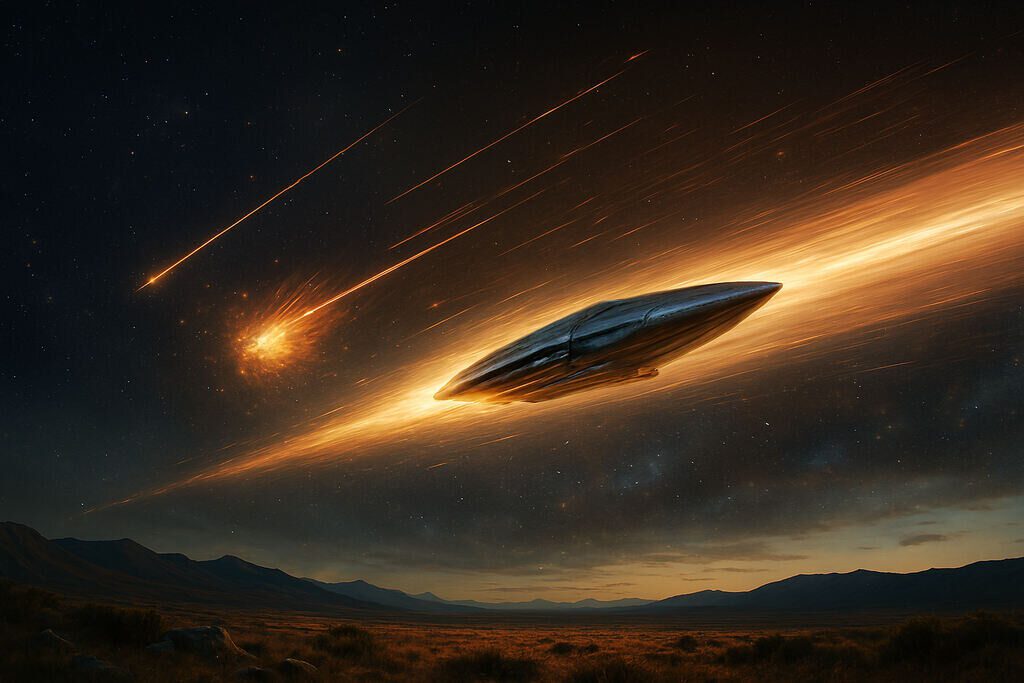
At near-light speeds, even tiny particles become apocalyptic weapons. A speck of dust or a hydrogen atom, hit at 99.9% of light-speed, would carry the energy of a nuclear bomb. The ship’s hull would be continuously bombarded by an incredibly intense barrage of radiation and particles, an effect known as “Hawking Radiation” for moving objects. Shielding would need to be impossibly thick or use incredibly powerful magnetic fields to deflect charged particles. This isn’t a minor engineering hurdle; it’s a show-stopping problem for any proposed near-light-speed vehicle.
11. Where Are We Now? Current Tech vs. The Dream
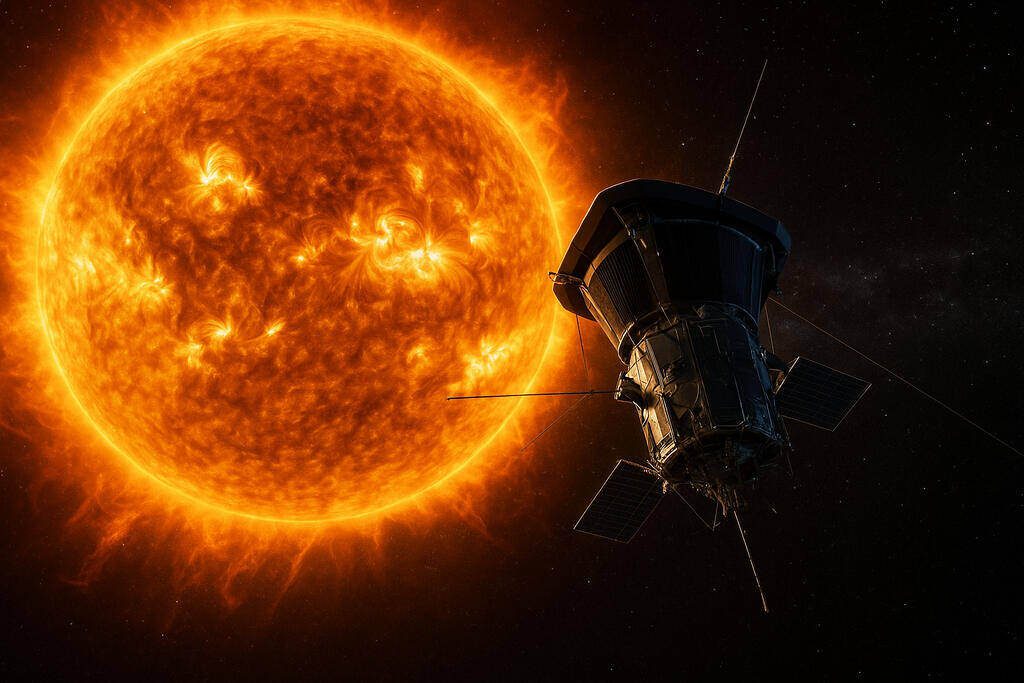
Our current fastest human-made object is the Parker Solar Probe, which will hit about 430,000 miles per hour. That’s blazing fast, but still only 0.064% of light-speed. Our most efficient engines, like ion thrusters, provide gentle but continuous thrust for years—great for solar system travel but useless for reaching relativistic speeds. Projects like Breakthrough Starshot aim to use giant lasers to push tiny, gram-weight “nanocraft” with light sails to 20% of light-speed. This is our most realistic near-term concept, but it’s for microscopic probes, not people.
12. The Role of Imagination in Science
While the physics is stern, imagination is crucial. Concepts like warp drives and wormholes keep scientists asking, “What if?” They push us to test the boundaries of known physics. History shows that today’s science fiction can become tomorrow’s science fact.
The transistor, the submarine, and even space travel itself were once mere fantasies. By rigorously exploring these “what if” scenarios, we sometimes discover new principles or loopholes. Dreaming of light-speed travel drives innovation in propulsion, materials science, and energy in ways that benefit us right here on Earth.
13. What About “Instant” Teleportation?

Some hope that quantum entanglement—where particles affect each other instantly across distances—could lead to teleportation or communication. This is a misunderstanding. While the particles are “connected” in a spooky way, you can’t use them to send information faster than light.
Any attempt to read the transmitted state requires sending classical data at light-speed or slower. So-called “quantum teleportation” is about copying the state of a particle, not moving matter. It’s vital for future encryption and computing, but not a shortcut for traveling to Alpha Centauri.
14. The Philosophical Impact: A Cosmic Perspective

The struggle with light-speed teaches us humility and wonder. It shows the universe has rules, and we are bound by them. It forces us to think in cosmic timescales. If human journeys to the stars ever happen, they will be generational missions or one-way trips to settle new worlds.
This perspective shifts how we see ourselves: not as masters of the cosmos, but as a young species taking its first tentative steps into a vast, challenging, and beautiful universe. It makes our home planet seem all the more precious and in need of care.
Conclusion: The Journey Matters More Than The Destination
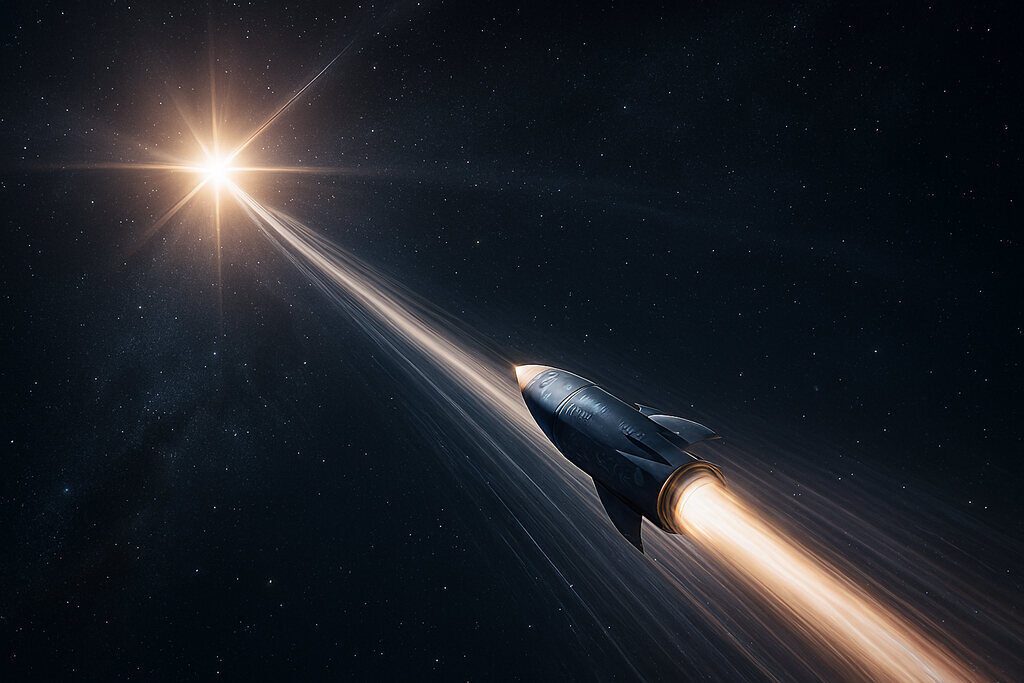
Reaching for the stars at light-speed may forever be beyond our grasp. But in trying, we’ve uncovered the breathtaking truths of relativity, glimpsed the curvature of space-time, and learned to think on a galactic scale. The real treasure isn’t a faster engine; it’s the knowledge gained on the quest.
Each tiny probe we send, each equation we solve, is a step forward. We may never zip across galaxies, but by pushing against this ultimate limit, we grow as explorers, thinkers, and dreamers. And that, in itself, is a wonderful human achievement. Keep looking up and wondering.