
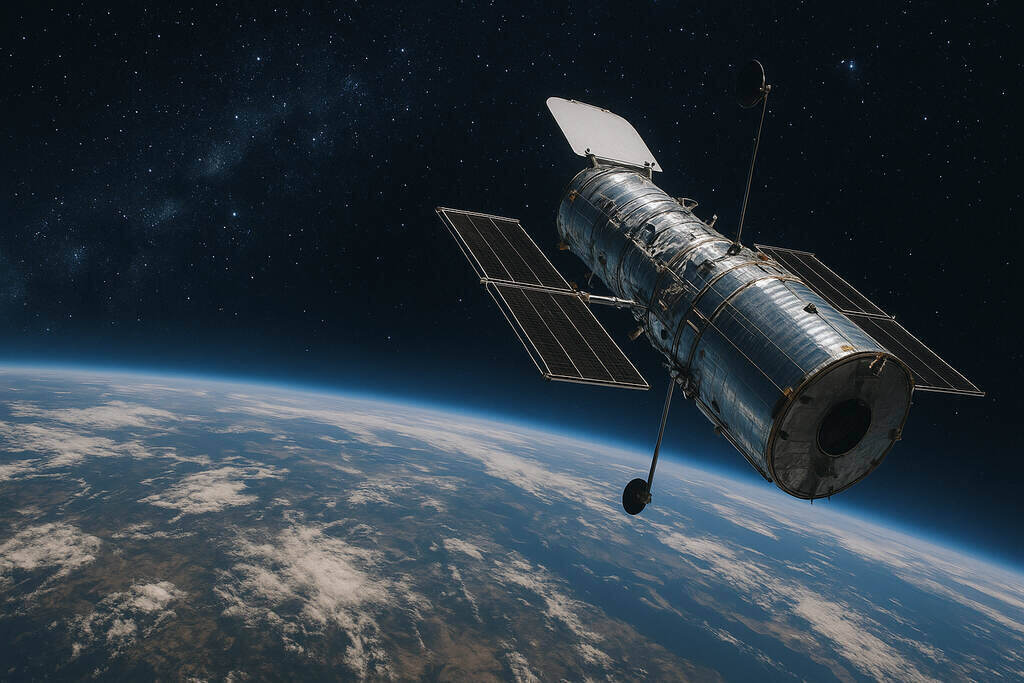
When the Hubble Space Telescope launched in 1990, no one could have imagined how deeply it would change our understanding of the cosmos. Floating high above Earth’s atmosphere, Hubble gave us crystal-clear views of galaxies, stars, and nebulae that had only been fuzzy dots before.
It showed us not just where we are in space—but who we are as explorers. From breathtaking photos of the early universe to evidence of dark energy, Hubble became more than a telescope. It became our window to infinity, teaching humanity to look up and dream bigger than ever before.
1. Why the Hubble Telescope Matters
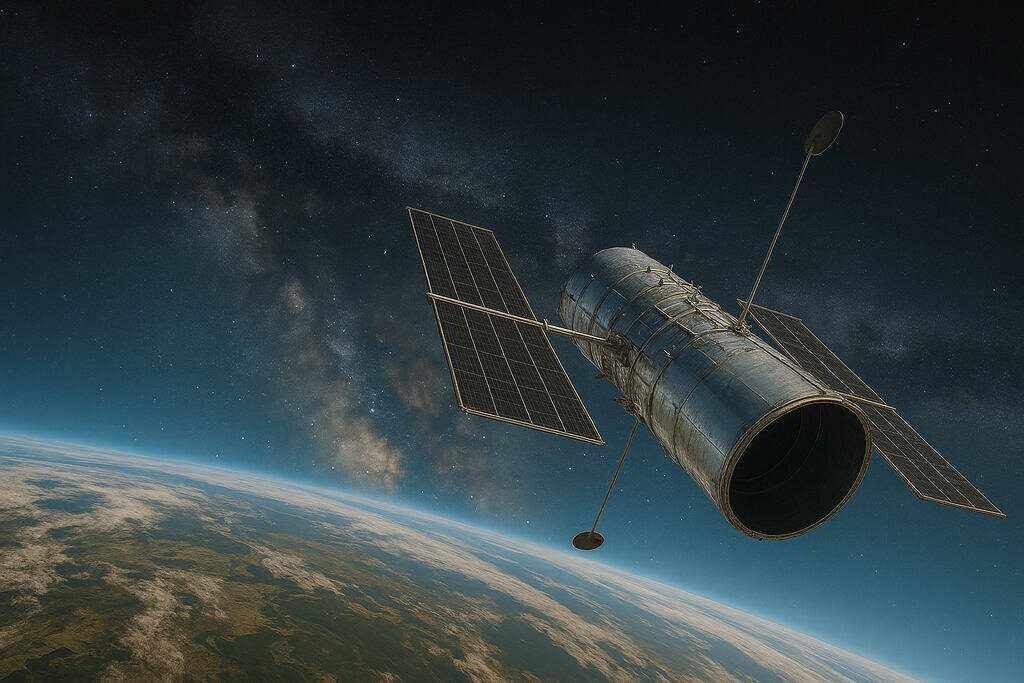
Before Hubble, ground-based telescopes struggled with atmospheric distortion—Earth’s air blurs starlight, like looking through water. Hubble changed that. Orbiting 547 kilometers above the planet, it bypassed this distortion and captured incredibly sharp images. Suddenly, galaxies billions of light-years away came into focus.
Hubble didn’t just take pictures; it offered answers. It helped confirm that the universe is expanding, mapped the life cycles of stars, and revealed planets outside our solar system. Hubble became humanity’s most powerful eye, proving that where you look from matters just as much as what you look for.
2. The Birth of a Bold Vision
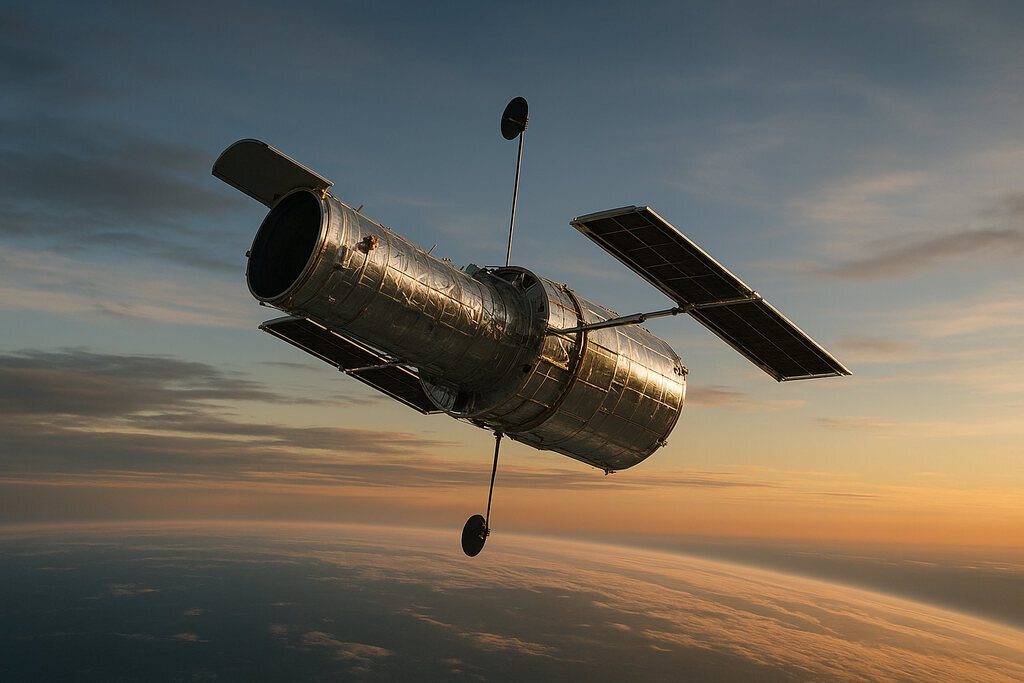
Hubble’s story began long before its 1990 launch. In the 1940s, astronomer Lyman Spitzer dreamed of a telescope floating above Earth’s atmosphere. Scientists and engineers spent decades designing one that could survive the vacuum of space while being serviceable by astronauts.
The result was a $2.5 billion project—an enormous investment at the time. Yet, that vision paid off more than anyone could imagine. Hubble was a symbol of human collaboration: thousands of engineers, scientists, and astronauts working together across generations to bring one dream into orbit.
3. The Near-Disaster of Its First Images
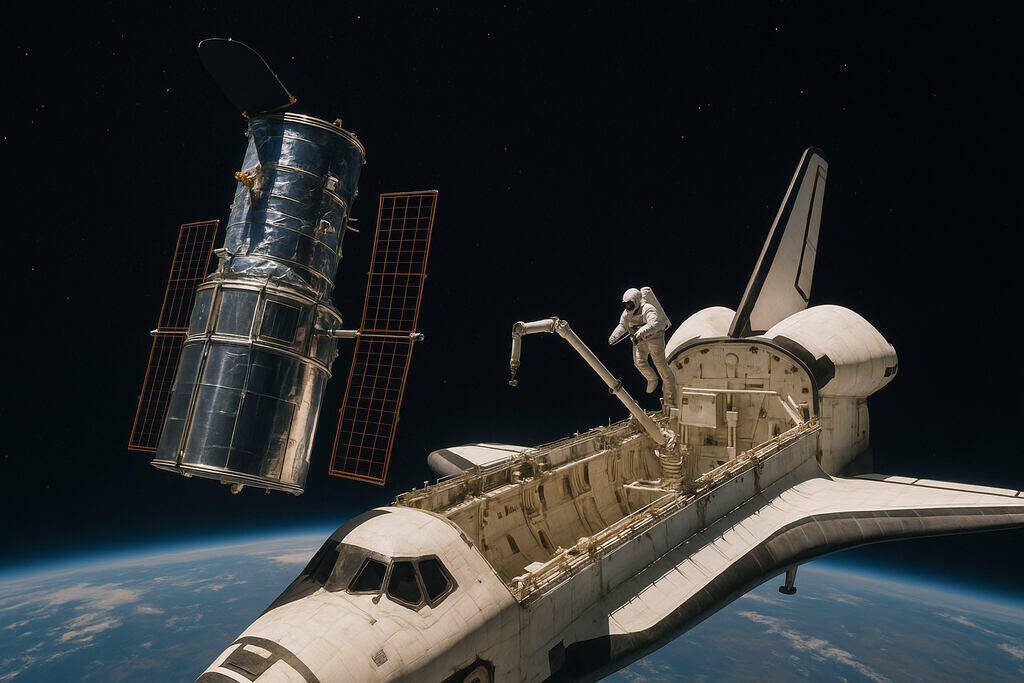
When Hubble’s first photos came back blurry in 1990, it felt like heartbreak. A tiny flaw in the main mirror—just 1/50th the width of a human hair—made images fuzzy. Critics called it a failure, and jokes flooded late-night TV. But NASA refused to give up.
In 1993, astronauts aboard the Space Shuttle Endeavour installed corrective optics—a kind of “space contact lens.” The result? Razor-sharp images that silenced every critic. That repair mission became one of NASA’s proudest moments, proving that even in space, mistakes can be fixed through human skill and determination.
4. A True Team Effort in Orbit
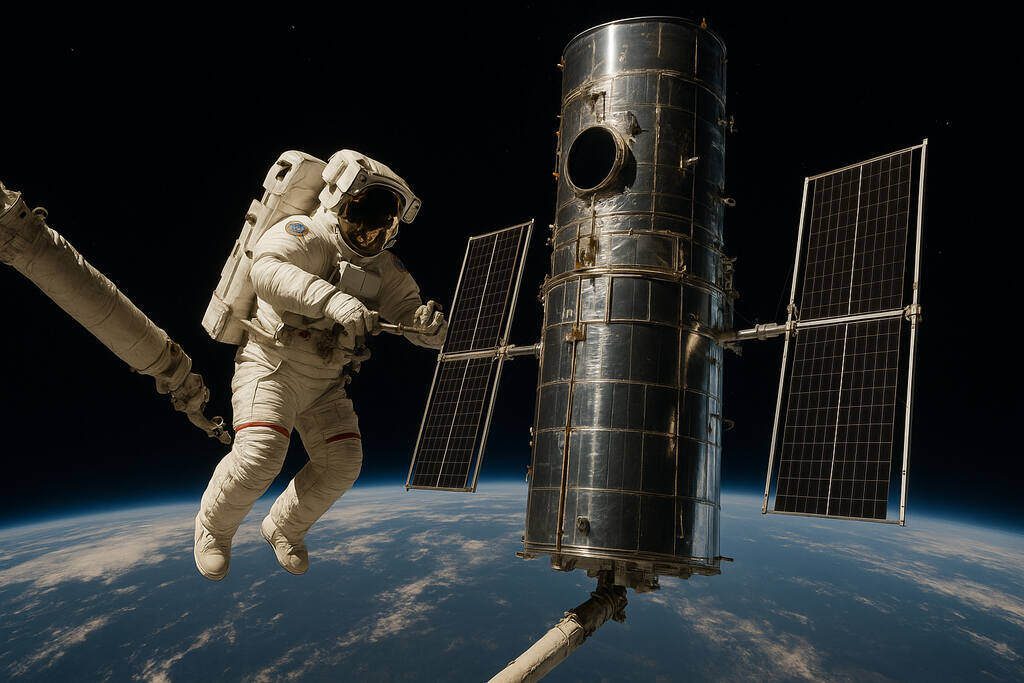
One of Hubble’s greatest strengths is that it’s not a “set it and forget it” machine. Over the years, five servicing missions by astronauts upgraded its instruments, replaced old parts, and extended its lifespan far beyond expectations.
Those missions—risky and complex—required astronauts to perform delicate repairs while orbiting Earth at 28,000 km/h. This teamwork between Earth-bound scientists and spacewalking astronauts made Hubble not just a tool of science, but a triumph of human cooperation, courage, and persistence.
5. Unveiling the Birth and Death of Stars

Hubble gave us breathtaking views of stellar nurseries—cosmic clouds where new stars are born. The famous Pillars of Creation in the Eagle Nebula revealed young stars forming inside towering gas columns. Hubble also captured the explosive deaths of stars in supernovae, showing how elements like carbon and oxygen—essential for life—are scattered through the cosmos. These images didn’t just amaze us; they told a story of cosmic recycling, proving that every atom in our bodies once came from a dying star.
6. Revealing the Beauty of Galaxies
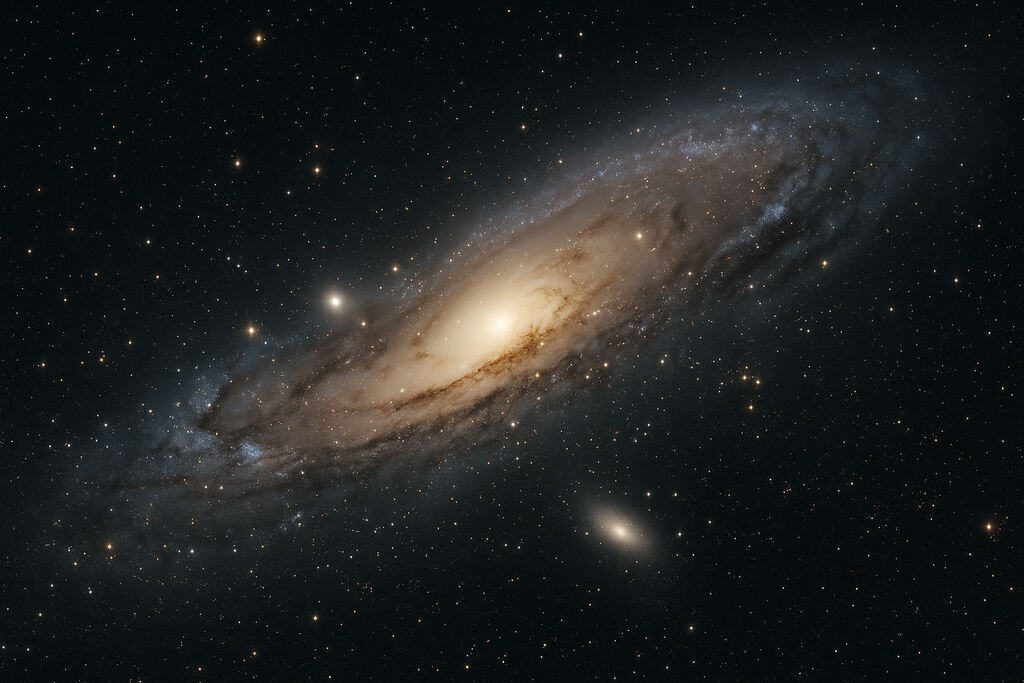
Before Hubble, galaxies were blurry spirals or faint smudges. Now, we see them in dazzling detail—spiral arms, glowing cores, and vast clusters stretching across billions of light-years. The Hubble Deep Field image, taken by pointing the telescope at what looked like an “empty” patch of sky, revealed over 3,000 galaxies in a single frame. It reminded us how small we are—and how vast creation truly is. That one image alone changed our understanding of how many galaxies exist in the universe.
7. Discovering the Age of the Universe
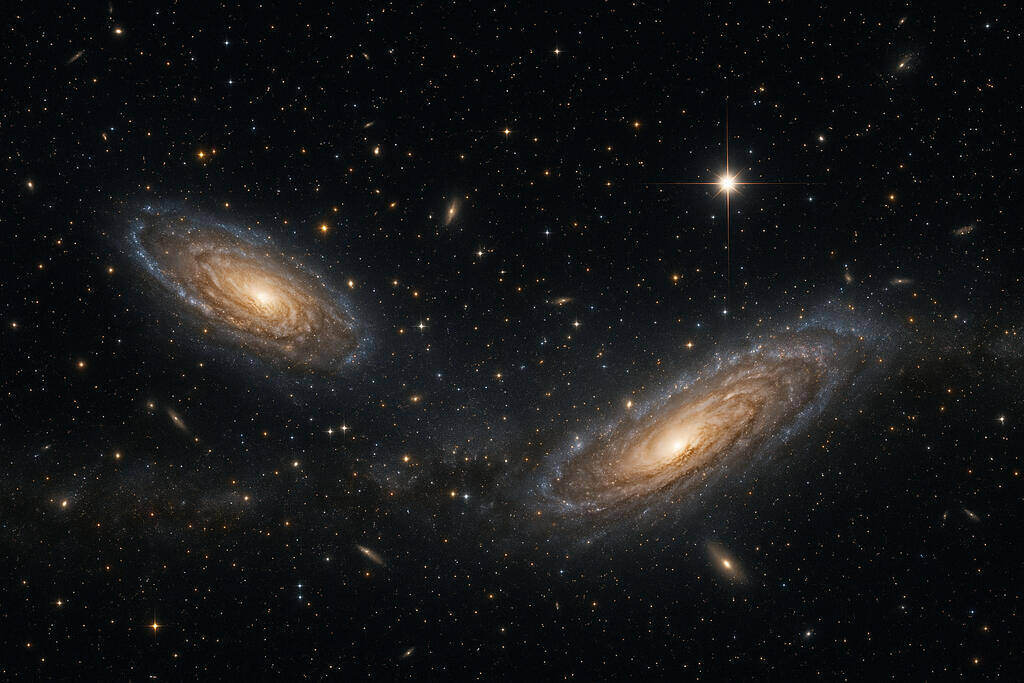
For decades, scientists debated the universe’s age. Hubble’s precise measurements of distant Cepheid variable stars helped settle the argument: the universe is about 13.8 billion years old. By observing how light stretches as galaxies move away—a concept known as redshift—Hubble confirmed that the universe has been expanding since the Big Bang. This discovery wasn’t just a number—it connected humanity to cosmic time itself, showing that everything we know has been evolving for nearly 14 billion years.
8. Witnessing Black Holes in Action
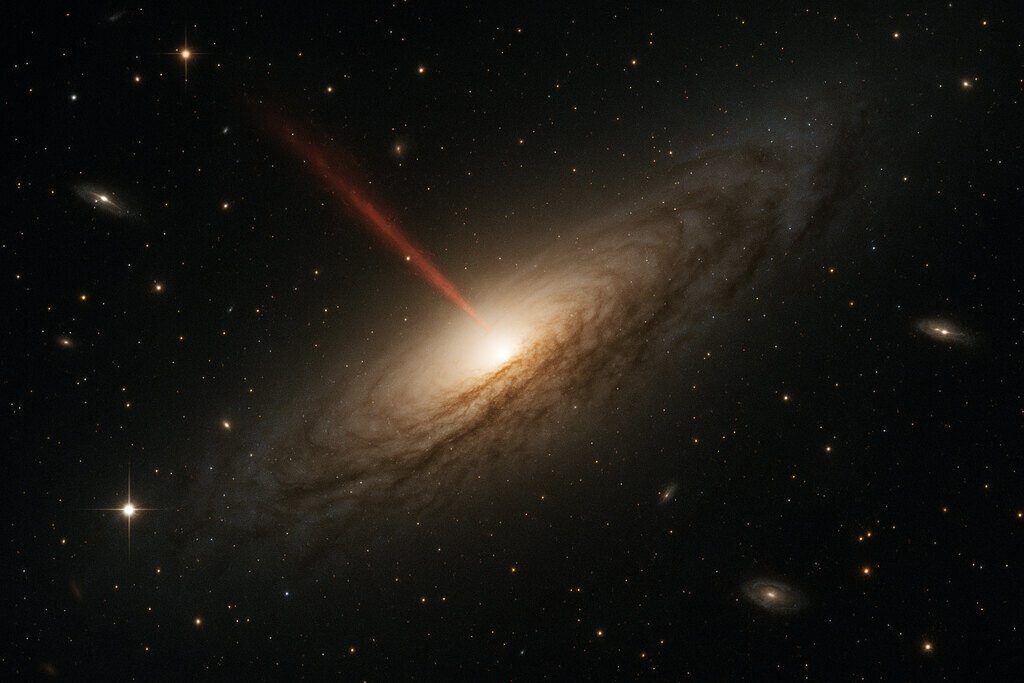
Before Hubble, black holes were mostly theoretical. But Hubble provided proof. It observed stars orbiting invisible objects at incredible speeds near the centers of galaxies—evidence of supermassive black holes. It even showed that nearly every large galaxy harbors one. Hubble’s findings turned science fiction into fact, reshaping our understanding of how galaxies grow and evolve. What was once a mysterious idea became a cornerstone of modern astrophysics, thanks to this orbiting observatory.
9. Helping Discover Dark Energy
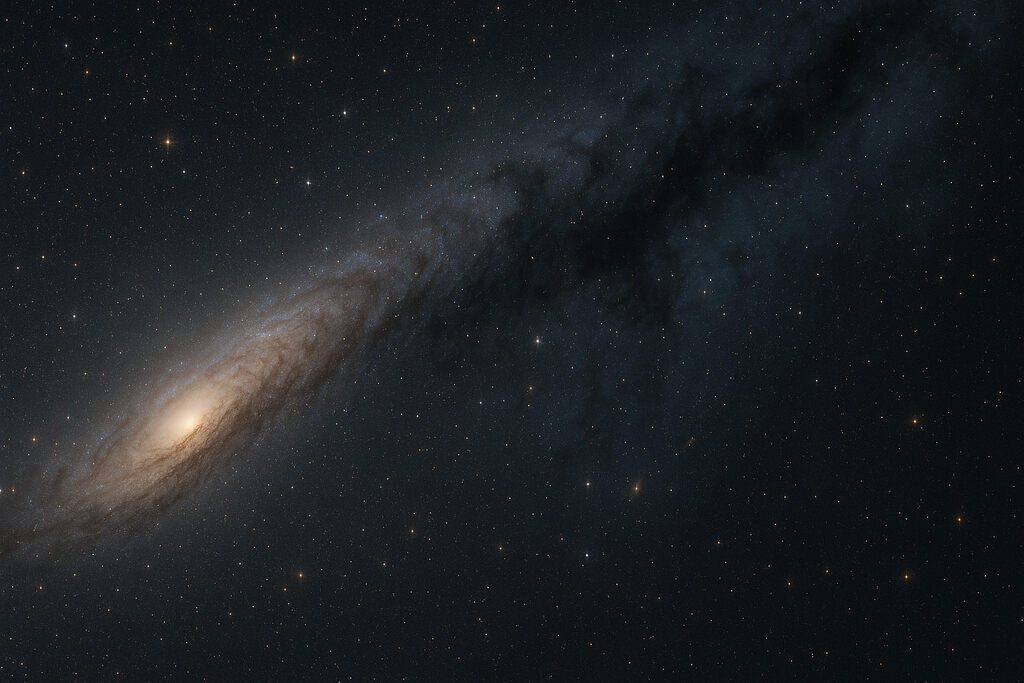
In the late 1990s, astronomers using Hubble made a shocking discovery: the universe’s expansion is speeding up, not slowing down. This meant something—an unknown force—was pushing galaxies apart. They called it “dark energy,” and it now makes up about 68% of the universe. Hubble’s data was key to confirming this strange reality, leading to one of the greatest mysteries in science. Dark energy remains unseen, but thanks to Hubble, we know it exists—and it’s rewriting the rules of cosmology.
10. Peering Back in Time
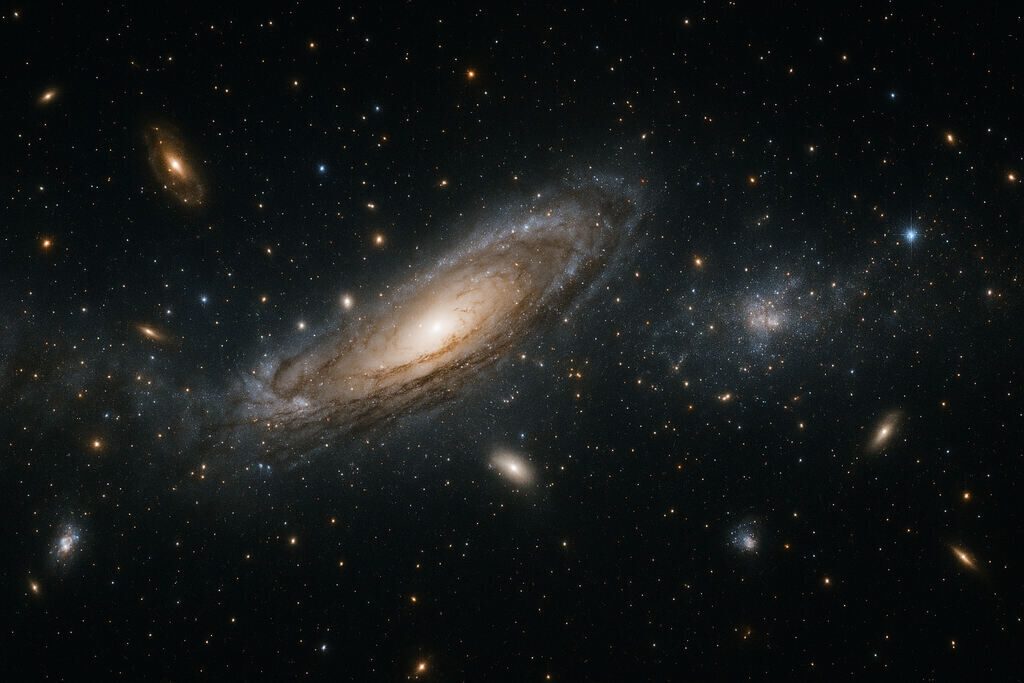
When Hubble observes distant galaxies, it’s also looking into the past. Because light takes time to travel, Hubble’s images of faraway objects show them as they were billions of years ago. This ability makes Hubble a time machine. By studying ancient galaxies, astronomers can trace how the universe evolved from a fiery beginning to the structured beauty we see today. Every image from Hubble is a glimpse through time—a visual diary of cosmic history.
11. The Hubble Deep Field: A Glimpse into Infinity
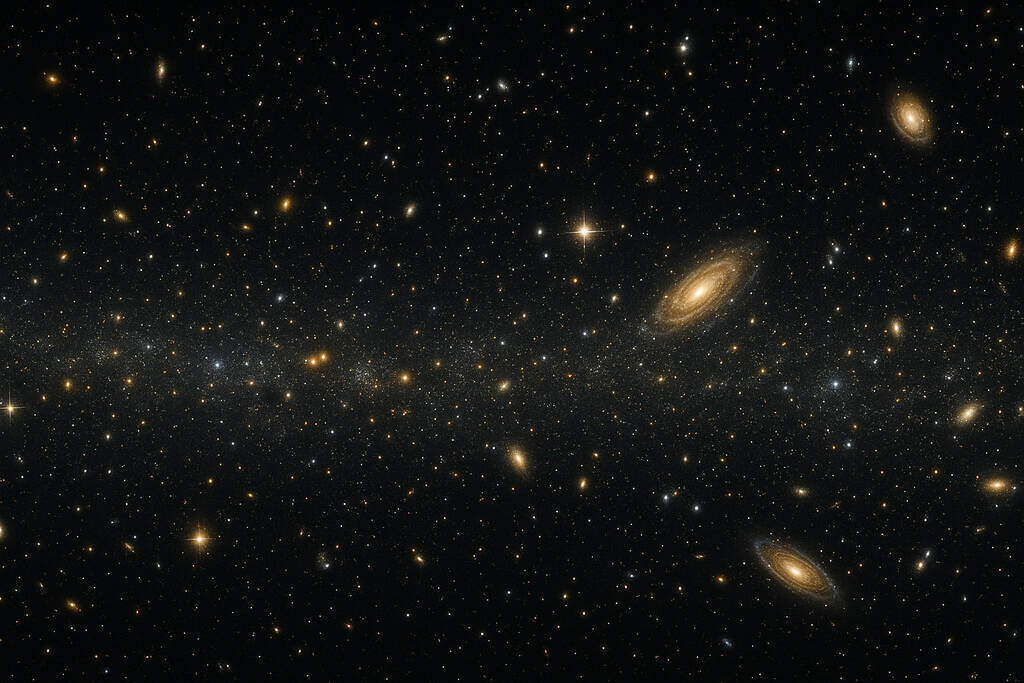
In 1995, scientists pointed Hubble at a dark, “empty” region of space for 10 days. The resulting image, the Hubble Deep Field, revealed thousands of galaxies packed into a tiny corner of the sky. Later versions, like the Ultra Deep Field, went even deeper. These images changed astronomy forever. They showed that every patch of sky, no matter how small, teems with galaxies. It was humbling and awe-inspiring, reminding us that what we think is “nothing” may be full of wonders unseen.
12. Inspiring New Generations
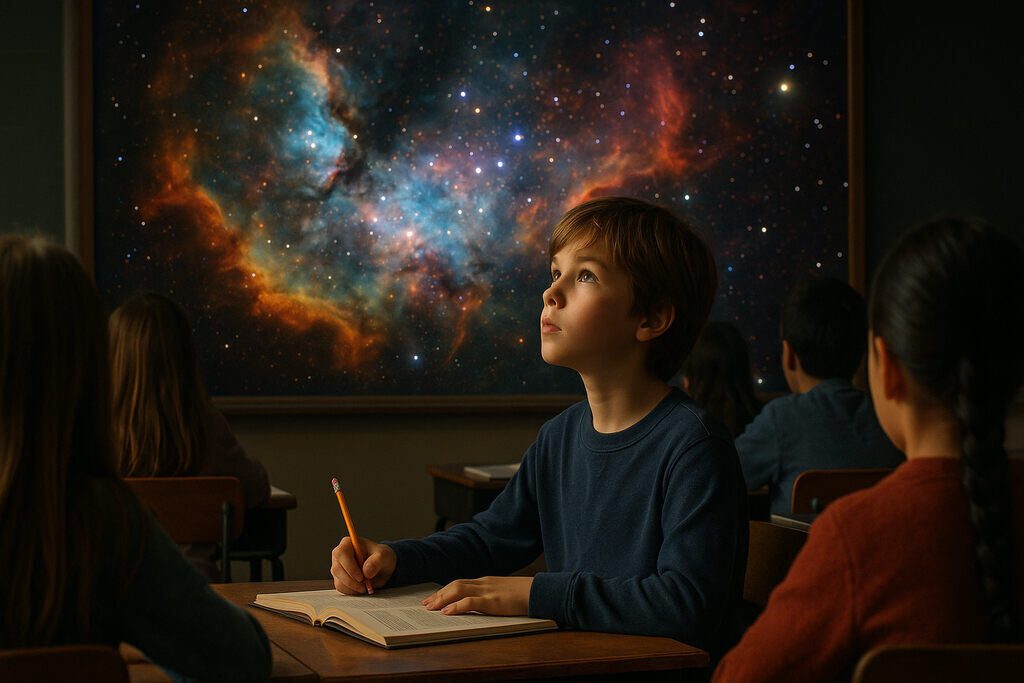
Hubble’s colorful, high-definition images—of nebulae, star clusters, and galaxies—have become symbols of wonder. They’re used in classrooms, documentaries, and art. For countless students, one look at a Hubble photo sparked a lifelong love of science. It proved that space exploration isn’t just for scientists—it’s for dreamers, artists, and anyone who looks up with curiosity. Hubble taught us that science and beauty can exist together, inspiring generations to keep reaching higher.
13. A Global Collaboration
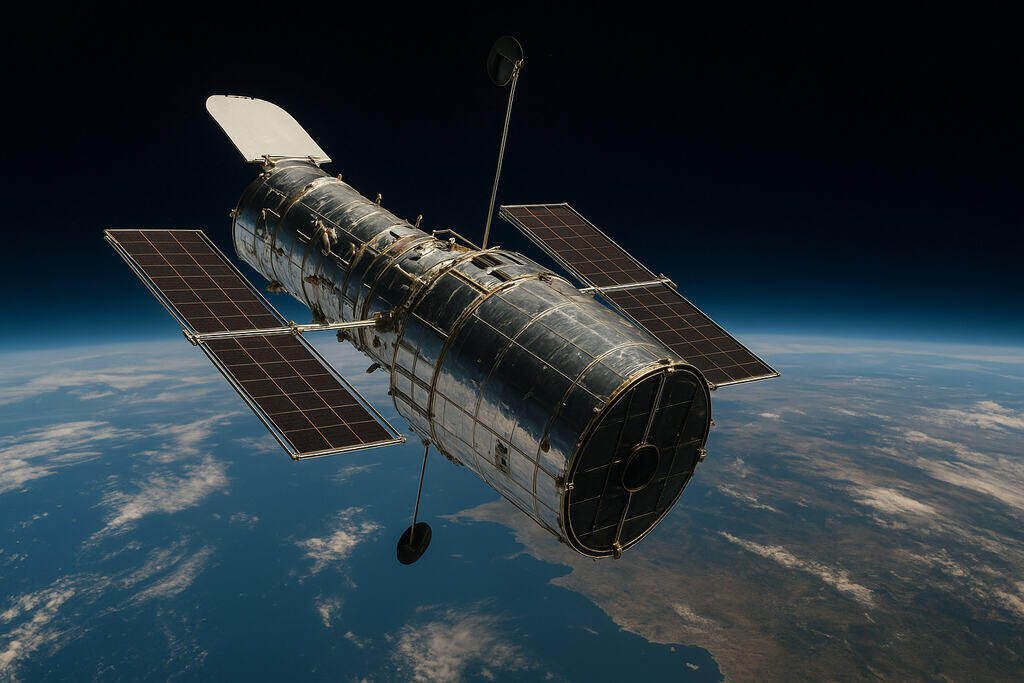
Hubble is managed by NASA and the European Space Agency, with contributions from scientists worldwide. Its discoveries are shared freely, allowing astronomers from any country to study its data. This global cooperation shows how exploration unites humanity beyond borders. The telescope’s success belongs not just to America or Europe—but to every person who believes in discovery. Hubble became a model for future missions, proving that knowledge grows best when shared.
14. Passing the Torch to the James Webb Telescope
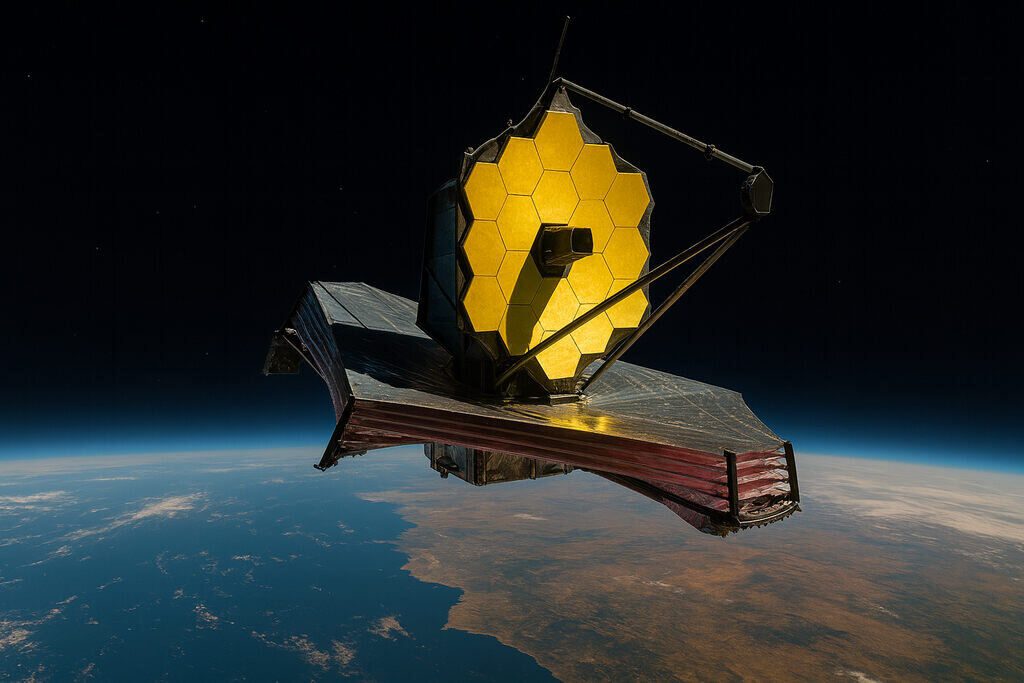
Hubble’s successor, the James Webb Space Telescope (JWST), launched in 2021 to look even deeper into space. But JWST doesn’t replace Hubble—it builds on its legacy. While Hubble sees in visible and ultraviolet light, Webb peers into infrared, revealing the earliest galaxies. Together, they form a partnership across generations of technology. Hubble opened the door to the universe; Webb will show what lies beyond. It’s a powerful reminder that science is a relay race, not a sprint.
15. Lessons from the Edge of the Universe
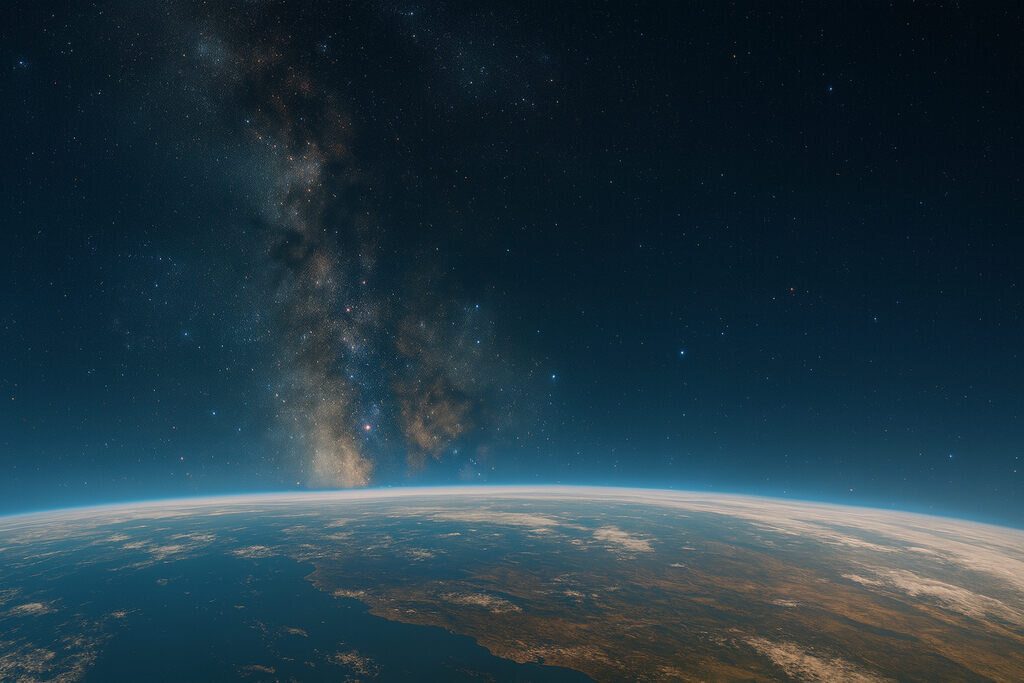
Perhaps Hubble’s greatest gift isn’t its data, but its perspective. It taught us humility. It reminded us that we’re tiny, yet capable of infinite curiosity. Each photo—whether of a star’s birth or a galaxy’s death—connects us to the story of everything. Hubble redefined exploration not by how far we travel, but by how deeply we see. It proved that even from our small blue planet, we can touch the edge of eternity—if we dare to look up.
Conclusion
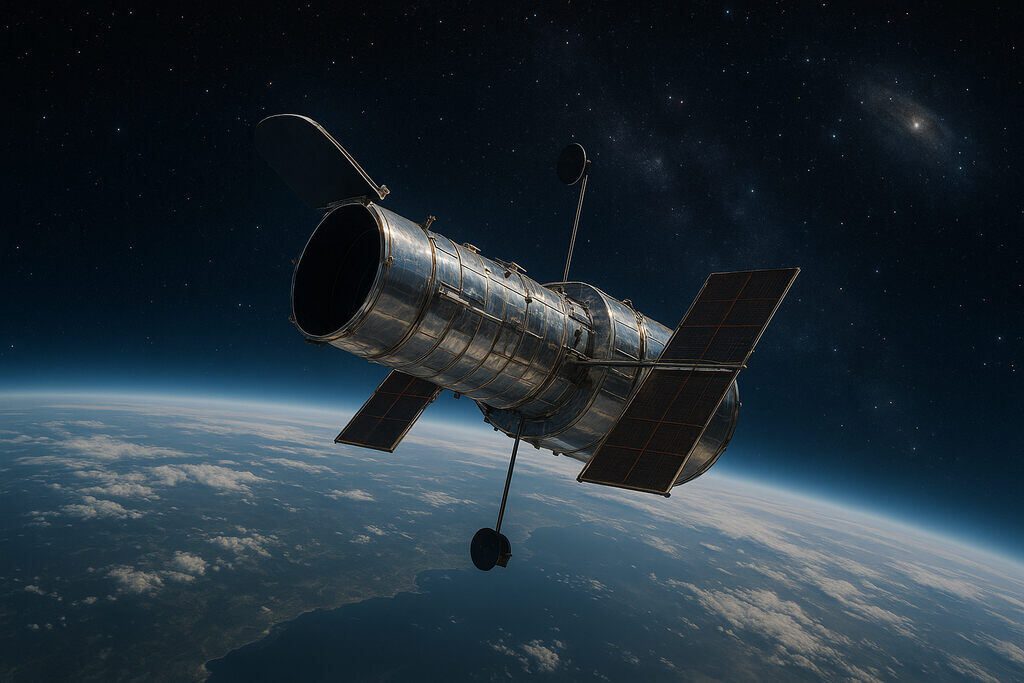
The Hubble Space Telescope began as a dream and became a revelation. It showed us the beauty of the unknown, the courage of human effort, and the boundless nature of curiosity. Its images didn’t just change astronomy—they changed us. Because when we look into the universe through Hubble’s eyes, we see not just stars and galaxies, but our own reflection: curious, creative, and forever reaching for the light.